
Agent to Agent Testing Platform vs Nani
Side-by-side comparison to help you choose the right tool.

Agent to Agent Testing Platform
Validate and enhance AI agent performance across chat, voice, and phone systems to ensure security and compliance.
Last updated: February 28, 2026

Nani
Nani evolves your AI art from scattered prompts into organized, reusable sets for a seamless creative workflow.
Last updated: February 28, 2026
Visual Comparison
Agent to Agent Testing Platform
Nani
Feature Comparison
Agent to Agent Testing Platform
Automated Scenario Generation
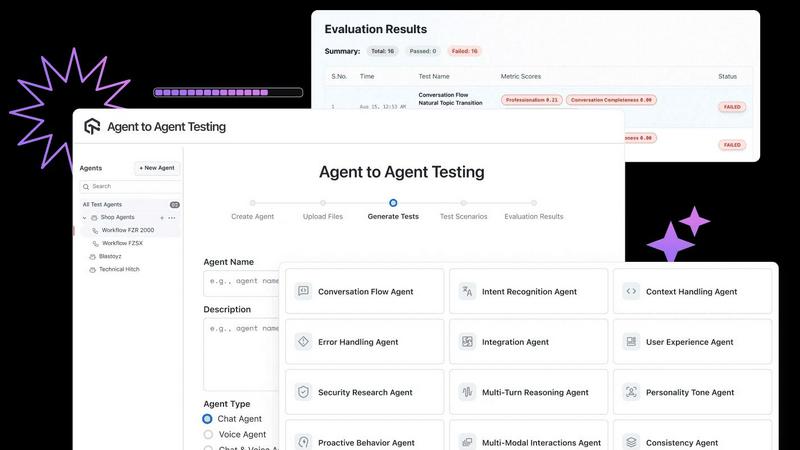
The platform utilizes automated scenario generation to create a wide array of diverse test cases for AI agents. These scenarios simulate interactions across chat, voice, and phone modalities, ensuring that agents are rigorously tested under conditions that closely mirror real-world usage.
True Multi-Modal Understanding
Agent to Agent Testing allows users to define detailed requirements or upload Product Requirement Documents (PRDs) that include various inputs such as images, audio, and video. This multi-modal approach helps to evaluate the expected output of the agent, thereby reflecting real-world complexities.
Autonomous Test Scenario Generation
Access a comprehensive library of hundreds of predefined scenarios or create custom scenarios tailored to specific testing needs. This feature enables users to assess various aspects of AI agent functionality, including personality tone, data privacy, and intent recognition.
Regression Testing with Risk Scoring
The platform offers end-to-end regression testing capabilities accompanied by insightful risk scoring. This feature highlights potential areas of concern, allowing teams to prioritize critical issues and streamline their testing efforts for optimal performance.
Nani
Nano Banana Pro Engine
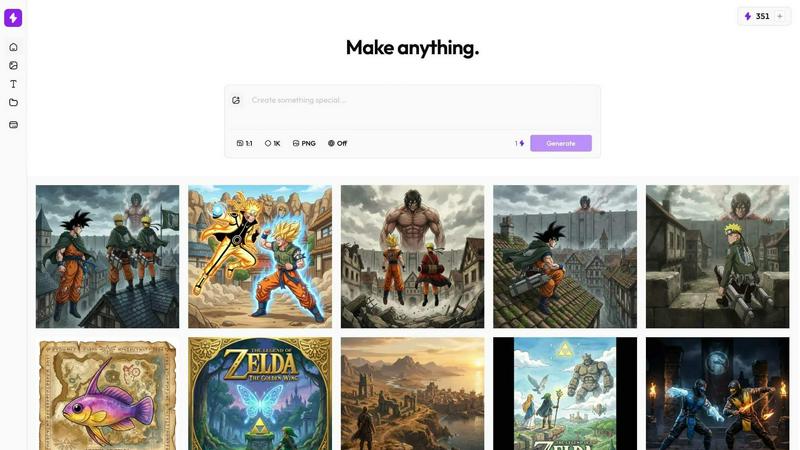
At the heart of Nani is the cutting-edge Nano Banana Pro AI model, delivering high-fidelity image generation in seconds. This powerful engine supports customizable aspect ratios and resolutions up to 2K, producing stunning, watermark-free visuals directly from your text prompts. It eliminates the technical barriers, allowing you to focus purely on your creative vision and iterate rapidly without compromise.
Reusable Prompt Sets
This feature is a game-changer for serial creation. Instead of copying and pasting prompts, you can save entire prompt configurations—including character descriptions, art styles, and scene settings—as reusable "Sets." This ensures absolute consistency across multiple generations, whether you're developing a character series or maintaining a branded visual style, accelerating your workflow exponentially.
Organized Creative Library
Nani provides a robust organizational system to scale with your output. Create custom folders, bulk-select images for management, and filter your gallery by favorites. This structure turns a chaotic feed of images into a tidy, searchable library, ensuring you can always find past work and manage growing projects efficiently.
Seamless Collaborative Workflow
Nani is built for a connected creative process. You can drag and drop images as visual references for new generations, share any creation via a public link, and even allow others to recreate your work in their own accounts. This facilitates smooth feedback loops, client presentations, and team-based projects, evolving individual creation into collaborative production.
Use Cases
Agent to Agent Testing Platform
Quality Assurance for Chatbots
Enterprises can leverage the platform to perform comprehensive testing of chatbots, ensuring they respond accurately and effectively to user inquiries. By simulating a variety of user interactions, businesses can enhance their chatbot's reliability and user experience.
Voice Assistant Validation
Organizations deploying voice assistants can utilize the platform to validate their performance in nuanced, multi-turn conversations. This comprehensive testing ensures that voice agents can understand and respond appropriately in real-world scenarios.
Phone Caller Agent Testing
The platform supports testing for phone caller agents, enabling businesses to assess their performance in voice-based interactions. This use case is critical for customer service environments where AI agents must handle complex queries effectively.
Persona-Based Testing
By simulating diverse user personas, companies can ensure that their AI agents are equipped to handle a wide range of user behaviors and needs. This feature helps in enhancing the overall user experience by ensuring that the AI agents cater to different demographics effectively.
Nani
Developing Consistent Comic Characters
Artists and illustrators can use Nani's Sets to lock in the precise visual details of a character—from facial features and costume to coloring style. This allows for generating the same character in hundreds of different poses, expressions, and scenes without prompt drift, making it indispensable for comic book creation, storyboarding, and character design portfolios.
Maintaining Brand Visual Campaigns
Marketing teams and social media managers can create a Set that defines their brand's aesthetic, including color palette, mood, and composition style. This ensures every generated asset for ads, blog graphics, or social posts remains on-brand, enabling the quick production of a large volume of cohesive visual content for campaigns.
Streamlining Concept Art Exploration
Concept artists and game developers can rapidly iterate on environment designs, creature concepts, or prop ideas. By saving different thematic or stylistic Sets, they can generate dozens of variations on a core idea, organize them into project-specific folders, and easily share the best options with directors or team members for feedback.
Building Educational Content Libraries
Educators and content creators can produce tailored illustrations for courses, articles, or presentations. By creating Sets for different topics or lesson styles, they can generate accurate, consistent imagery on demand, organizing them into folders for each module or project, greatly enhancing the production of visual learning materials.
Overview
About Agent to Agent Testing Platform
Agent to Agent Testing Platform is a revolutionary AI-native quality assurance framework specifically designed to validate the behavior of AI agents in real-world scenarios. As AI systems gain more autonomy and unpredictability, traditional quality assurance methods, which are typically designed for static software, are no longer adequate. This platform transcends basic prompt-level checks by assessing full, multi-turn conversations across various modalities, including chat, voice, and phone interactions. Its main value proposition is to provide enterprises with a reliable means to validate AI agents before they are deployed in production environments. With the ability to generate multi-agent tests using over 17 specialized AI agents, the platform uncovers long-tail failures, edge cases, and interaction patterns that manual testing often overlooks. This ensures that the AI agents perform effectively and seamlessly in diverse real-world applications.
About Nani
Nani represents the next evolutionary step in AI-powered creativity, moving beyond the initial thrill of one-off image generation to a mature, scalable workflow. It is built for creators who have outgrown the repetitive grind of prompt rewriting and chaotic image libraries. By harnessing the power of Google's Nano Banana Pro (Gemini), Nani provides a professional-grade environment where artists, designers, marketers, and content creators can establish and refine their creative processes. Its core value proposition is profound efficiency: it transforms a fragmented, administrative-heavy task into a streamlined, organized, and repeatable system. With features designed for consistency and scale, Nani allows your creative practice to evolve from experimental dabbling to a reliable, high-output production pipeline. You stop wrestling with the tool and start focusing on the art, enabling your work to grow in both volume and quality without the corresponding increase in tedious overhead.
Frequently Asked Questions
Agent to Agent Testing Platform FAQ
What is Agent to Agent Testing?
Agent to Agent Testing is an AI-native framework designed to validate the behavior of AI agents across various modalities in real-world scenarios, ensuring they perform effectively before deployment.
How does the platform ensure comprehensive testing?
The platform utilizes automated scenario generation and multi-agent test creation to cover a wide range of interactions and edge cases that manual testing may miss, providing a thorough assessment of AI agents.
Can I create custom test scenarios?
Yes, users can access a library of predefined scenarios and also have the flexibility to create custom scenarios tailored to their specific testing needs, enhancing the relevance of the tests.
What kind of metrics can be evaluated?
The platform evaluates critical metrics such as bias, toxicity, hallucinations, effectiveness, accuracy, empathy, and professionalism, providing a detailed analysis of AI agent performance.
Nani FAQ
How do I get started with Nani?
Getting started is simple and risk-free. Visit the Nani website and sign up to create your account. You'll immediately receive 5 free credits to begin generating images, with no credit card required. This allows you to explore the interface, test the Nano Banana Pro engine, and experience the workflow features firsthand.
What is Nani's pricing model?
Nani uses a simple, transparent credit-based system where you only pay for what you generate. There are no monthly subscriptions or commitments. Purchased credits never expire, and generation costs approximately 30 cents per image for 1K or 2K resolution. Larger purchases include bonus credits, and all features are unlocked from day one.
Can I use Nani for commercial projects?
Yes, absolutely. Images generated with Nani are yours to use, including for commercial purposes. The platform does not apply visible watermarks, and the terms grant you the rights to utilize the creations in your professional work, from client deliverables to published content.
How does the "Sets" feature improve my workflow?
Sets fundamentally change your workflow from repetitive to replicable. By saving a detailed prompt configuration, you eliminate the need to manually re-enter or copy-paste complex instructions. This not only saves immense time but also guarantees visual consistency across all your generations, which is critical for professional series, brand work, or any project requiring a uniform style.
Alternatives
Agent to Agent Testing Platform Alternatives
The Agent to Agent Testing Platform is a pioneering solution in the realm of AI assistants, designed to validate the behavior of AI agents across a variety of communication channels, including chat, voice, and multimodal systems. As organizations increasingly rely on AI-driven solutions, they often seek alternatives due to factors such as pricing, feature set, or specific platform needs that may not align with their operational requirements. Additionally, some users may desire enhanced capabilities or more tailored functionalities that better suit their unique workflows. When considering alternatives, it’s crucial to evaluate the core features that matter most to your organization. Look for a solution that offers comprehensive validation methods, scalability for testing multiple interactions, and robust security and compliance measures. Prioritize platforms that can adapt to the evolving landscape of AI technology, ensuring that they can meet your long-term quality assurance goals effectively.
Nani Alternatives
Nani is an AI workflow tool designed for artists, designers, and content creators who regularly generate images. It belongs to the category of AI assistants that focus on streamlining and organizing the creative process, moving beyond one-off image creation to a more structured, repeatable system. Users often explore alternatives for various reasons. Some may be in an earlier stage of their creative journey and seek simpler, more general-purpose tools. Others, as their projects grow in complexity, might require different pricing models, specific platform integrations, or advanced features that cater to a more specialized workflow not covered by a single solution. When evaluating alternatives, consider your current growth stage. Look for tools that match your need for either foundational simplicity or advanced organizational power. Key factors include how the tool manages prompts and assets for reuse, its ability to maintain visual consistency across projects, and how it integrates iteration into the creative process to help you evolve your work efficiently.