
Mod vs Skene
Side-by-side comparison to help you choose the right tool.

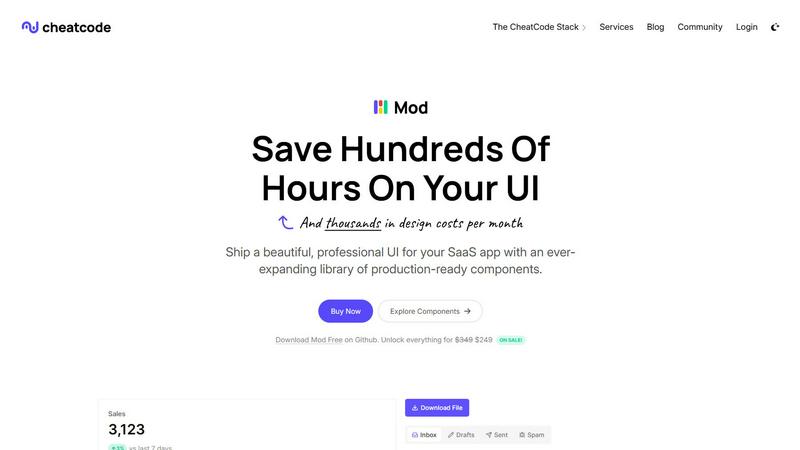
Mod evolves from a CSS framework into a complete component library for shipping SaaS UI faster.

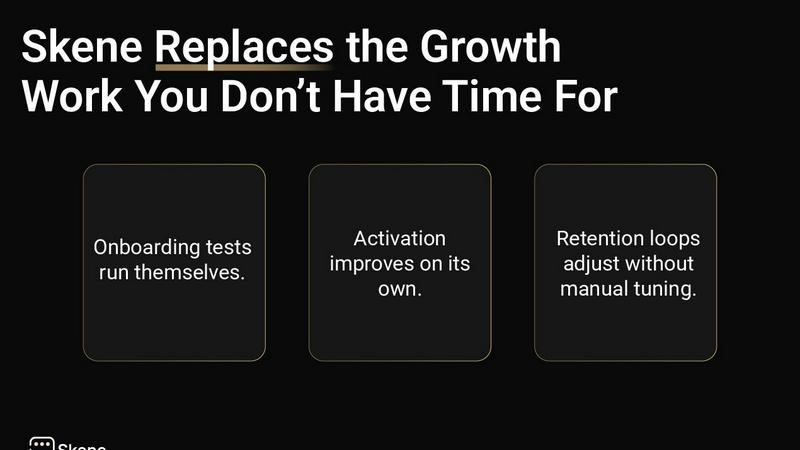
Skene drives product-led growth by automating onboarding insights directly from your codebase for seamless integration.
Last updated: February 28, 2026
Visual Comparison
Mod
Skene
Feature Comparison
Mod
Expansive Component Library
Mod provides an extensive collection of over 88 meticulously designed components that form the building blocks of any SaaS application. This includes everything from complex data tables, modals, and navigation bars to form elements, alerts, and pricing cards. Each component is built with accessibility and semantic HTML in mind, ensuring a solid foundation. This library allows developers to assemble sophisticated user interfaces without starting from scratch, ensuring consistency and professional polish across every page and feature of your application.
Deep Customization with Design Tokens
Beyond pre-built components, Mod offers profound customization through 168 distinct styles and a comprehensive system of design tokens. This includes spacing scales, color palettes, typography rules, and shadow elevations. You can theme your entire application by modifying these central tokens, and changes propagate automatically across all components. This system provides the flexibility to match your brand identity perfectly while maintaining the underlying consistency and quality of the Mod framework, scaling your design system as your product grows.
Framework-Agnostic & Lightweight Integration
Mod is engineered to work seamlessly within any modern tech stack. It delivers pure, utility-first CSS that can be imported into projects using Next.js, Nuxt, Vite, Svelte, Ruby on Rails, Django, and more. There is no heavy JavaScript runtime or proprietary syntax to learn; it integrates like any other CSS framework. This agnostic approach future-proofs your investment, allowing you to adopt Mod today and change your underlying application framework tomorrow without rewriting your entire UI layer.
Production-Ready Themes & Icons
The library ships with two complete, professional themes (light and dark) and includes built-in, easy-to-implement dark mode support. Furthermore, it comes bundled with a suite of over 1,500 crisp icons, covering a vast range of common SaaS needs. Having a cohesive icon set and pre-configured themes eliminates the time-consuming search for matching assets and ensures visual harmony. Every element is built with a mobile-first, responsive design philosophy, guaranteeing your application looks and works flawlessly on all devices from the start.
Skene
Automated Onboarding Optimization
Skene automates the onboarding process by analyzing user interactions within the codebase. It identifies friction points and generates tailored onboarding flows that adapt based on real-time user behavior, ensuring a smoother and more effective onboarding experience.
Contextual Growth Insights
By providing a context layer that connects directly to your code, Skene delivers actionable insights derived from your product’s performance. This allows developers to understand user behavior deeply, focus on critical areas for improvement, and implement data-driven decisions for growth.
Seamless Code Integration
Skene integrates effortlessly with existing codebases, allowing developers to replace cumbersome third-party tools with a solution that feels native to their product. This means that growth becomes part of the development infrastructure rather than an external add-on, maintaining performance and data integrity.
Outcome-Based Pricing Model
Skene employs an innovative pricing structure where users pay only when customers successfully complete their onboarding journey. This approach aligns the interests of Skene with those of its users, offering a risk-free way to enhance customer activation and retention.
Use Cases
Mod
Rapid Prototyping and MVP Development
For solo developers and startups, speed is everything. Mod is the perfect tool for rapidly transforming a concept into a tangible, investor-ready minimum viable product (MVP). By leveraging the pre-built components and layouts, you can construct a fully functional, visually compelling prototype in days instead of weeks. This allows you to validate your business idea with real users quickly, gather feedback, and iterate without being blocked by UI development hurdles.
Standardizing UI Across Development Teams
In growing teams, inconsistent UI implementation can slow down development and harm product quality. Mod acts as a single source of truth for the user interface. By adopting Mod, teams ensure that every developer is using the same components, spacing, and colors. This standardization streamlines collaboration, reduces code review time for visual aspects, and ensures that new features feel like a natural part of the existing application, maintaining a professional and unified user experience.
Modernizing Legacy Application UIs
Many established SaaS products suffer from outdated, inconsistent front-end code that is expensive to maintain. Mod provides a strategic path for gradual UI modernization. Teams can incrementally replace old, brittle CSS with Mod's components and utility classes, one section or feature at a time. This approach minimizes risk, allows for continuous deployment, and progressively delivers a fresh, modern, and responsive interface to users without a costly full rewrite.
Building Consistent Internal Tools and Admin Panels
SaaS companies often need to build robust internal dashboards, admin panels, and customer portals. These projects are critical for operations but rarely justify a large design investment. Mod is ideal for this use case, enabling small teams or even a single developer to build powerful, intuitive internal tools that maintain the same level of polish and usability as the customer-facing product, all while staying on budget and schedule.
Skene
Indie Developer Empowerment
Indie developers can leverage Skene to enhance their product's growth trajectory without the need for a dedicated growth team. By automating user onboarding and retention processes, they can focus on product development while Skene drives user engagement.
Startups Scaling Growth
Early-stage startups often lack the resources for extensive customer success teams. Skene provides a scalable solution that autonomously optimizes user flows, ensuring that startups can grow efficiently while retaining their customer base.
Enhancing User Experience
Businesses looking to improve user experience can utilize Skene to identify bottlenecks within their onboarding process. By addressing these friction points, companies can significantly enhance user satisfaction and engagement, leading to increased retention rates.
Data-Driven Growth Strategies
With Skene’s analytics capabilities, companies can track real-time user progress and engagement metrics. This data empowers teams to make informed decisions, refine their approaches, and ultimately drive better growth outcomes through continuous optimization.
Overview
About Mod
Mod represents a pivotal evolution in the journey of a SaaS developer, transitioning from wrestling with inconsistent, time-consuming UI code to shipping polished, professional applications with confidence and speed. It is a comprehensive CSS framework and component library meticulously crafted for the specific demands of building modern software-as-a-service user interfaces. Designed for solo founders, indie hackers, and development teams, Mod eliminates the traditional design bottleneck. Its core value proposition is acceleration: by providing a vast, production-ready system of visual styles and interactive components, it allows developers to bypass the repetitive groundwork of UI construction. This means you can invest your energy into your unique application logic and user experience, dramatically reducing time-to-market and the costs associated with custom design work. Framework-agnostic by design, Mod seamlessly integrates into your existing workflow, whether you're building with Next.js, SvelteKit, Rails, Django, or any other modern stack. It's not just a set of tools; it's a growth catalyst for your project, enabling you to present a mature, visually cohesive product from the very first commit.
About Skene
Skene is a groundbreaking automated Product-Led Growth (PLG) iteration engine specifically designed to empower indie developers and early-stage startups in their growth journey. It eliminates the need for dedicated growth teams by intelligently analyzing customer behavior and code to optimize onboarding, activation, and retention processes. By closely observing user actions, Skene identifies friction points and areas where users drop off during activation. This innovative engine autonomously generates, tests, and deploys improved user flows, making the onboarding process increasingly effective over time. Skene acts as a "growth team in a box," allowing developers to focus on creating their products while enhancing user activation and maximizing customer lifetime value. By integrating growth seamlessly into the development process, Skene ensures that businesses can continuously evolve, adapt, and thrive in a competitive landscape without the overhead of additional personnel.
Frequently Asked Questions
Mod FAQ
Is Mod a JavaScript library or a CSS framework?
Mod is primarily a CSS framework. It delivers its functionality through CSS classes and design tokens. While its components are demonstrated with HTML structure, there is no bundled JavaScript behavior; you implement interactivity (like opening a modal) using your chosen front-end framework (React, Vue, Svelte, etc.) or vanilla JavaScript. This keeps it lightweight and gives you full control over component logic.
How does Mod handle responsiveness and mobile design?
Mod is built from the ground up with a mobile-first, responsive design philosophy. All components, layout grids, and spacing utilities are designed to adapt gracefully from small mobile screens to large desktop displays. You use responsive modifier classes (e.g., for different breakpoints) to control how elements behave across screen sizes, ensuring your SaaS application delivers an optimal experience on every device without requiring custom media queries for common patterns.
Can I use Mod with my existing project's CSS or other frameworks?
Yes, absolutely. Mod is designed to be incrementally adoptable. You can import its CSS alongside your existing stylesheets. It uses specific, semantic class names to minimize conflicts. A recommended approach is to start using Mod for new features or during a redesign, allowing you to gradually transition your project without disrupting currently working parts of your application.
What is included in the yearly updates mentioned?
The yearly updates ensure your license provides access to new components, features, and improvements released for Mod over a 12-month period. This includes additions to the component library, expansions of the icon set, new theme variations, updates to the design token system, and compatibility enhancements for new versions of major web frameworks. It's a commitment to keeping your toolset current and growing alongside modern web development standards.
Skene FAQ
What is PLG software?
PLG (Product-Led Growth) software helps users discover value in your product without manual intervention from sales or customer success teams. It automates the user journey, guiding users to activation, driving feature adoption, and strengthening retention through the product itself.
How is Skene different from traditional customer experience software?
Traditional customer experience tools necessitate manual tour creation and constant maintenance, often relying on brittle UI overlays that can break with updates. Skene, however, reads your codebase and automatically generates the necessary onboarding and analytics, ensuring everything updates seamlessly with new code deployments.
How long does it take to set up?
Setting up Skene is quick and easy, taking less than 60 seconds. Simply connect your GitHub or GitLab repository (read-only access), and Skene will automatically analyze your codebase to generate PLG flows without requiring any code changes or API modifications.
Is my code secure with Skene?
Yes, your code's security is paramount. Skene requires only read-only access to your repository, ensuring that the analysis occurs in a secure, isolated environment where your proprietary data remains protected.