

TaleHug AI Story Generator for Kids
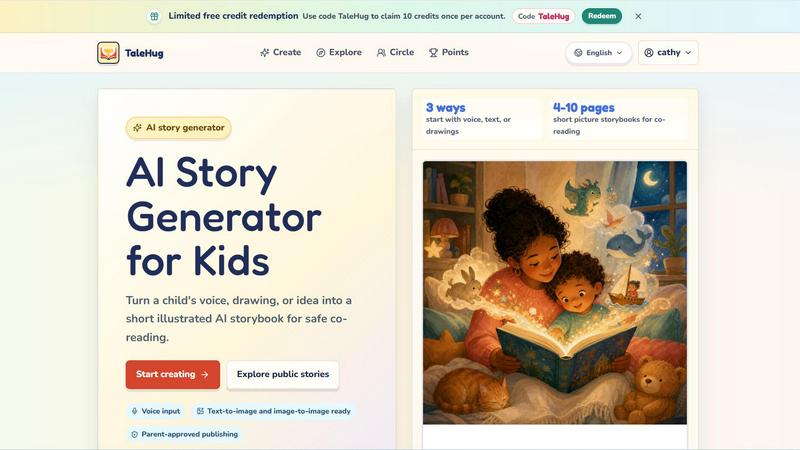
TaleHug turns a child's voice, drawing, or idea into a safe, illustrated AI storybook for co-reading, growing young creators one story at a time.
About TaleHug AI Story Generator for Kids
TaleHug is an AI-powered storytelling platform designed specifically for children, transforming their voices, drawings, and ideas into short, illustrated storybooks. This tool bridges the gap between a child's boundless imagination and the structure of a written narrative, making the creative process both accessible and magical. Geared towards preschool and kindergarten-aged children (ages 3-6), TaleHug provides a safe, parent-guided environment where young minds can become authors. The core value proposition is turning a simple spark of creativity into a 4-10 page picture storybook, complete with vibrant, AI-generated illustrations that match the child's unique input. The platform emphasizes kid-friendly interaction, allowing children to start with voice input, text, or their own drawings. Safety is paramount, with private drafts by default, parent approval required for any public sharing, and a complete absence of public comments. TaleHug is more than just a story generator; it is a growth tool that nurtures literacy, creativity, and confidence in young children, providing a structured yet flexible path from a simple idea to a finished, shareable storybook that families can co-read and cherish.
Features
Multi-Modal Story Input
Children are not limited to typing. TaleHug offers three distinct ways to start a story: voice input, text entry, or by uploading a drawing. A child can simply speak their idea, type out a few words, or draw a picture, and the AI will use that as the foundation for the story. This flexibility ensures that even pre-literate children can participate fully in the creative process, using the method that feels most natural to them.
AI-Powered Illustration Generation
Each story page is brought to life with a strong, colorful image generated by the AI. The platform is both text-to-image and image-to-image ready, meaning it can create illustrations from written descriptions or use a child's own drawing as a visual starting point. This feature transforms the story into a visually engaging picture book, making it more appealing for young readers and helping them connect the narrative with the artwork.
Parent-Approved Publishing and Safety Controls
TaleHug is built with a safety-first architecture. All story drafts are private by default. Before a story can be published to the "Circle" (a private sharing group) or the "Public" gallery, it requires explicit adult review and approval. The platform uses safe display names instead of full child names, collects no school names or contact details, and has zero public comments in the MVP. This creates a secure, parent-guided environment for children to share their creations.
Structured Storybook Format with Regeneration
The platform generates stories that are consistently 4-10 pages long, creating short, manageable picture storybooks perfect for co-reading sessions. Each page contains a strong image, one short sentence, and a stored prompt. This structure allows parents and children to regenerate specific pages if they wish, refining the story and illustrations until they are just right. This iterative process teaches children about editing and improvement in a fun, low-pressure way.
Use Cases
Bedtime Story Creation
Parents can use TaleHug to turn a child's sleepy idea into a personalized bedtime story. A child might whisper "a moon rabbit who goes to sleep," and the AI will generate a gentle, winding-down narrative with soft, dreamy illustrations. This creates a unique, co-created ritual that makes bedtime reading more engaging and personal, turning the child into an active participant in their own nightly story.
Classroom Social and Emotional Learning
Teachers can use TaleHug to create social stories that address specific classroom situations, such as sharing toys or being brave on the first day of school. By generating a story like "Sharing the Red Truck," a teacher can visually and narratively demonstrate a positive behavior or emotional concept. This makes abstract lessons concrete and memorable for young children, supporting their social-emotional development in a creative, non-confrontational way.
Overcoming Creative Blocks in Young Writers
For children who struggle to start writing or feel intimidated by a blank page, TaleHug provides a gentle on-ramp. A child can start by drawing a picture of a "tiny dragon" or speaking a simple phrase like "a brave soldier." The AI takes this initial spark and builds a complete narrative around it. This process shows the child that their small idea has value and can be the seed for a whole story, building confidence and encouraging further creative exploration.
Family Storytelling and Bonding
TaleHug can become a regular family activity where everyone contributes an idea. A family might decide to create a story about "Garden Courage," with each member suggesting a character or plot point. The AI then weaves these contributions into a cohesive storybook. This shared creative process fosters communication, collaboration, and a sense of joint accomplishment, resulting in a unique keepsake that the entire family can enjoy reading together.
Frequently Asked Questions
How does TaleHug ensure the safety of my child's data and stories?
Safety is a core design principle. All story drafts are private by default. Any publishing to the "Circle" or "Public" gallery requires explicit parent approval. The platform uses safe display names, does not collect full names, school names, or contact details, and has no public comments feature. The public gallery only features approved examples, ensuring a controlled and secure environment for young creators.
Can my child use TaleHug if they cannot read or write yet?
Absolutely. TaleHug is designed for children ages 3-6, including those who are not yet literate. The platform supports voice input, allowing a child to simply speak their story idea. It also supports drawing input, where a child can upload a picture they have drawn. The AI then uses this audio or visual input to generate the story and illustrations, making the tool accessible to all children regardless of their reading or writing ability.
What is the typical length of a story generated by TaleHug?
TaleHug is designed to create short, manageable picture storybooks that are perfect for co-reading. Each generated story is consistently between 4 and 10 pages long. Each page contains one short, simple sentence paired with a strong, AI-generated illustration. This format is ideal for the attention span of preschool and kindergarten children and makes for a quick, rewarding reading experience.
How can I get started with TaleHug for free?
You can get started by visiting the TaleHug platform and using the promotional code "TaleHug" to claim 10 free credits for your account. This redemption is limited to one use per account. With these credits, you can begin creating your first illustrated storybook, exploring the voice, text, and drawing input methods, and experiencing the full creation flow from idea to a finished, shareable story.
Similar to TaleHug AI Story Generator for Kids


subtitlegenerator.net
Free AI subtitle generator that auto-creates subtitles and flags AI mistakes for quick review.

benchmark.directory
AI tools written up by the people who paid for them. Pricing, integrations, data policy and the limit we hit in a week of use.

saasgrow.ai
Get your SaaS tool discovered. Free listing, honest screening, a dofollow link — and no way for anyone to outbid you.

Tools Network
New AI tools drop every day — Tools Network makes sure you never miss the ones that matter.


Built2Win AI Indexing
AI‑ready websites, WebAgentScan SaaS, and Indexing Pack. MCP, A2A, llms.txt — hand‑coded PHP, complete ownership, flat‑fee, free quote.