
Crawlkit vs SERPView
Side-by-side comparison to help you choose the right tool.

Crawlkit
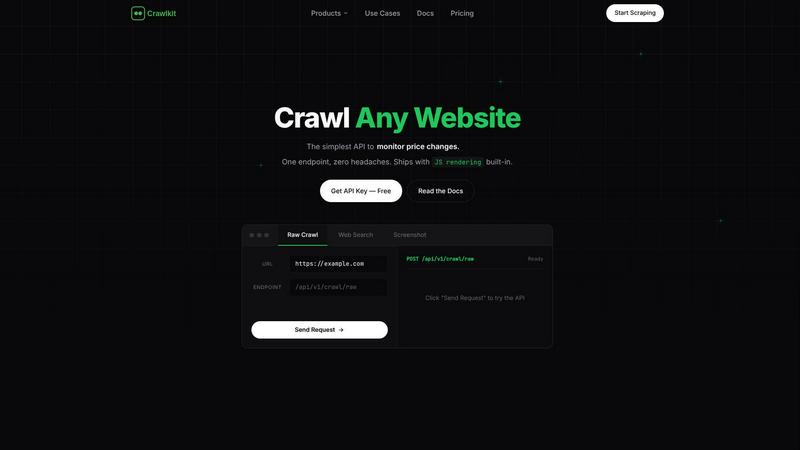
CrawlKit evolves your data extraction from complex scraping into a single, simple API for any website.
Last updated: February 28, 2026

SERPView
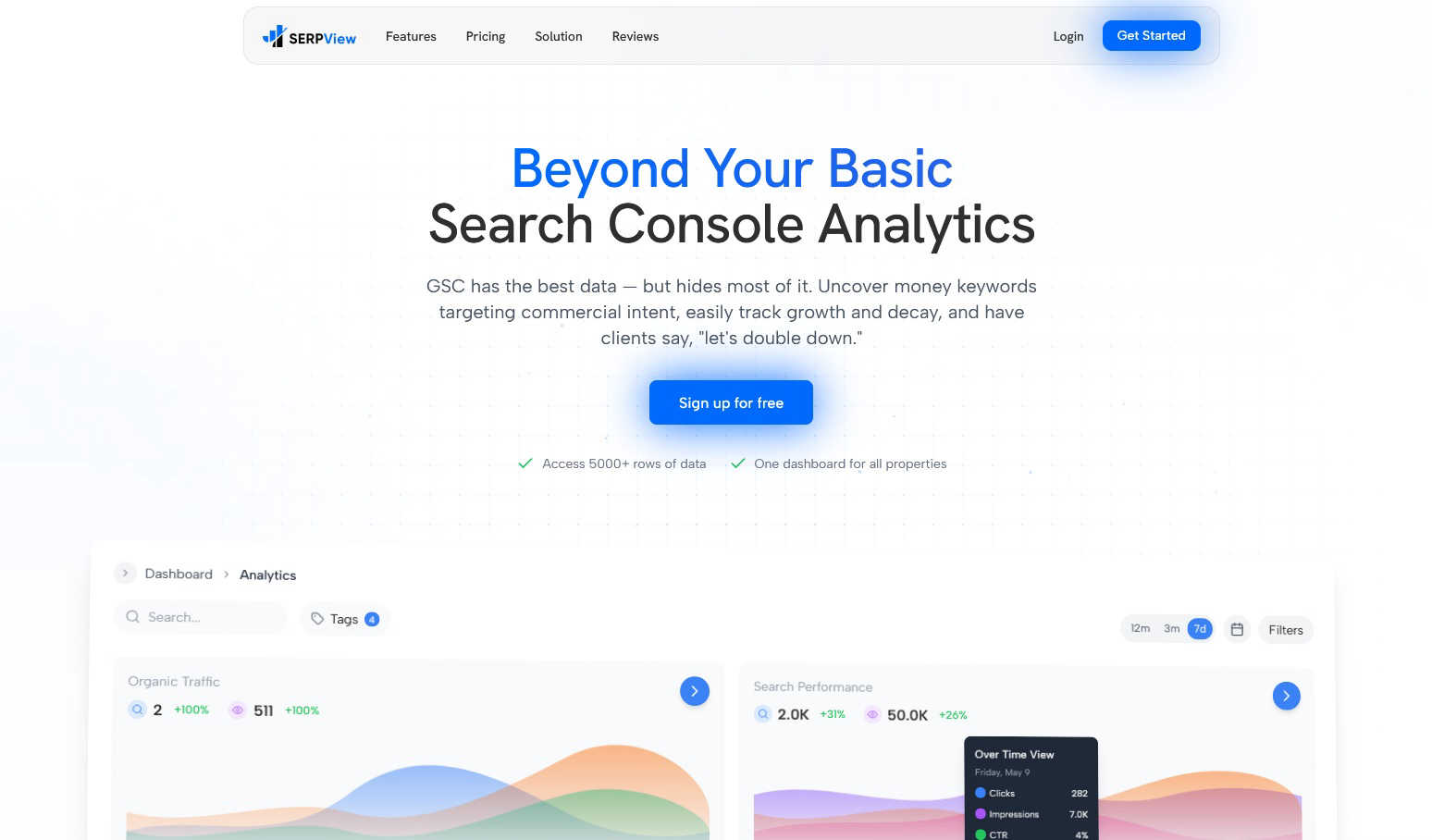
SERPView unlocks hidden Google Search Console data to reveal growth opportunities and track SEO performance.
Last updated: March 1, 2026
Visual Comparison
Crawlkit
SERPView
Feature Comparison
Crawlkit
Unified API for Diverse Sources
Crawlkit provides a single, consistent API endpoint to extract structured data from a vast array of platforms. Whether you need professional profiles from LinkedIn, social metrics from Instagram, app reviews from the Play Store, or parsed search results from Google, the interface remains the same. This eliminates the need to learn and integrate multiple specialized scrapers, streamlining your development process and accelerating your project's evolution from prototype to production.
Built-In Infrastructure Management
The platform autonomously handles the entire technical stack required for reliable scraping. This includes intelligent proxy rotation to avoid IP bans, full JavaScript rendering with headless browsers to load dynamic content, sophisticated logic to bypass anti-bot protections, and automatic retries for failed requests. This feature allows your team to progress from worrying about infrastructure stability to confidently scaling your data collection, knowing Crawlkit manages the hard parts.
Guaranteed Structured Data Output
Crawlkit doesn't just return raw HTML; it delivers parsed, clean, and structured JSON data. For every supported platform, the API provides data in a predictable schema, such as follower counts, employee lists, job titles, or review ratings. This ensures you spend zero time on data parsing and cleaning, allowing you to immediately progress to the analysis and integration stage of your workflow, building more robust and reliable applications faster.
Transparent, Credit-Based Pricing
With a simple pay-as-you-go credit system, Crawlkit offers full cost predictability and control. Each API call consumes a known number of credits, and credits never expire. There are no monthly commitments, hidden fees, or surprise overage charges. This pricing model supports the natural growth of your project, from initial experimentation with the free tier to scaled production use, with volume discounts that reward increased usage.
SERPView
Unlocked Performance Tracking
Move beyond the restrictive 1,000-row limit of Google Search Console. SERPView grants you access to over 50,000 rows of granular performance data, allowing you to track clicks, impressions, CTR, and average position across your entire site without any artificial constraints. This comprehensive view is essential for identifying long-tail opportunities and understanding true performance trends that basic tools miss.
Advanced Keyword & Page Analysis
Progress from simple ranking checks to strategic intent analysis. Uncover "money keywords" that signal strong commercial intent and track their position changes over time. Simultaneously, analyze page-level performance to instantly identify your top-performing content and spotlight underperforming pages that require optimization or consolidation, turning data into direct content strategy actions.
Cross-Device & International Insights
Evolve your strategy with segmented performance intelligence. Compare your search performance across mobile and desktop devices to identify optimization opportunities for each. Furthermore, track your rankings and traffic across different countries and languages, empowering you to tailor and refine your global SEO strategy with region-specific data and insights.
Topic Cluster & Algorithm Correlation Tracking
Advance your content strategy from single-page focus to topic authority. SERPView allows you to track the performance of entire topic clusters, giving you a holistic view of your content strategy's effectiveness. Additionally, correlate your ranking changes with Google's official algorithm updates and add custom annotations for site changes, transforming volatility into understandable cause-and-effect narratives.
Use Cases
Crawlkit
CRM and Lead Enrichment
Automatically enrich contact records in your CRM with high-quality data from professional networks. By pulling structured data from LinkedIn profiles, you can append job titles, current company information, skills, and experience to your leads. This progression from basic contact lists to rich, actionable prospect profiles empowers sales teams to personalize outreach and improve conversion rates significantly.
Competitive Intelligence and Market Research
Track competitors' digital footprints systematically. Monitor changes in their team on LinkedIn, analyze their app store reviews for user sentiment, or track their Instagram engagement metrics over time. Crawlkit enables the evolution from sporadic, manual checks to automated, real-time competitive dashboards, providing the data needed for strategic decision-making.
App Store Optimization (ASO) Analysis
Gather and analyze reviews and details from both the Google Play Store and Apple App Store for your own or competing applications. Extract ratings, review text, version history, and feature lists to understand user feedback, identify pain points, and track feature adoption. This data-driven approach progresses your ASO strategy from guesswork to a precise, iterative optimization process.
Real-Time Search Engine Monitoring
Execute web searches programmatically and receive clean, parsed results. Filter by language, region, or date to monitor brand mentions, track keyword rankings, or gather the latest news and publications in any industry. This use case evolves your market awareness from passive reading to an active, automated alerting and analysis system.
SERPView
For SEO Agencies Managing Multiple Clients
Agencies can seamlessly connect all client GSC properties into one unified dashboard, eliminating the need to constantly switch accounts. This centralized view, combined with deep data access and shareable reports, streamlines client reporting, improves coordination across teams, and provides a superior, data-rich service that demonstrates clear value and strategic insight.
For In-House Teams Driving Content Strategy
Content and SEO managers can move beyond guessing which topics resonate. By analyzing full topic cluster performance and uncovering high-intent keywords hidden beyond the 1,000-row limit, teams can make informed decisions on which content to update, expand, or retire, ensuring every piece aligns with user demand and business goals.
For E-commerce Sites Optimizing for Commercial Intent
Online stores can use SERPView to drill deep into keyword data to identify and prioritize product and category pages targeting commercial search queries. Tracking performance across devices helps optimize for mobile shoppers, while international insights support global expansion efforts by highlighting high-potential regional markets.
For Websites Recovering from Algorithm Updates
Site owners affected by search volatility can use the annotation feature to map traffic drops or gains directly against Google's core updates or their own site changes. This correlation turns confusing ranking fluctuations into a diagnostic timeline, providing clarity and direction for recovery efforts and future update preparedness.
Overview
About Crawlkit
Crawlkit represents a significant evolution in web data extraction, moving beyond the fragile, DIY scraping scripts of the past. It is a comprehensive API platform engineered for developers and data teams who are ready to scale their data operations without the operational burden. The journey from managing proxies, headless browsers, and constant anti-bot breakages to a simple, reliable API call is the core progression Crawlkit enables. It serves teams building data pipelines, competitive intelligence tools, market research platforms, and CRM enrichment systems, providing them with dependable, structured data from the most challenging sources. Its main value proposition is turning the entire web into a clean, queryable API. By abstracting away the immense complexity of modern web scraping—including proxy rotation, JavaScript rendering, CAPTCHA solving, and adaptive retry logic—Crawlkit allows professionals to focus entirely on the growth stage of their projects: analyzing data, gaining insights, and building products, rather than getting stuck in the maintenance phase of data collection infrastructure.
About SERPView
SERPView is the definitive evolution of search analytics, engineered for SEO professionals, digital marketers, and content creators who have progressed beyond the basic reporting of Google Search Console (GSC). It transforms the foundational, yet restricted, data from GSC into a powerful platform for strategic growth and data-driven decision-making. The core mission of SERPView is to liberate users from the limitations that hinder advanced analysis, most notably GSC's 1,000-row data cap. By unlocking access to over 50,000 rows of performance data, SERPView reveals the full, unfiltered spectrum of keyword opportunities, page-level trends, and user intent that were previously invisible. It consolidates multiple GSC properties into a single, centralized, and visual dashboard, replacing a fragmented and time-consuming workflow with a streamlined command center for organic search performance. This tool marks the critical transition from reactive reporting to proactive analysis, enabling teams to identify high-value commercial keywords, optimize comprehensive topic clusters, dissect performance across devices and countries, and correlate traffic trends with major Google algorithm updates. For any team committed to evolving their SEO strategy from guesswork to precision, SERPView is the essential upgrade.
Frequently Asked Questions
Crawlkit FAQ
What platforms does Crawlkit currently support?
Crawlkit supports a growing list of major platforms, including LinkedIn for company and profile data, Instagram for public profile and post metrics, and both the Google Play Store and Apple App Store for app details and reviews. They also offer a generic web search endpoint. The platform is continually evolving, and they encourage users to request new sources.
How does Crawlkit handle websites with anti-bot measures?
Crawlkit's infrastructure is specifically designed to bypass common anti-bot protections. It uses a combination of residential proxy rotation, realistic browser fingerprinting, and adaptive request patterns that mimic human behavior. This sophisticated system is managed entirely by Crawlkit, freeing you from the constant battle against blocks and CAPTCHAs.
What happens if an API request fails?
Crawlkit operates on a "refund on failure" policy. If a request fails due to issues on Crawlkit's side (e.g., unable to retrieve data from the target site), the credits used for that request are automatically refunded to your account. This ensures you only pay for successful, complete data delivery.
Is there a free tier to try Crawlkit?
Yes, you can start completely free with 100 credits upon sign-up. This allows you to test several API calls across different endpoints to evaluate the quality of the data and the reliability of the service without any financial commitment. You can upgrade to a paid plan at any time to purchase more credits.
SERPView FAQ
How is SERPView different from Google Search Console?
SERPView is built directly on top of your Google Search Console data, so it uses the same authoritative source. The key evolution is in access and analysis: SERPView removes GSC's 1,000-row limit, provides a unified dashboard for multiple properties, and delivers advanced features like topic cluster tracking, commercial keyword identification, and algorithm update correlation that GSC does not offer natively.
What data limits does SERPView have?
SERPView significantly expands upon GSC's limitations. While Google Search Console caps data exports at 1,000 rows, SERPView unlocks access to over 50,000 rows of performance data for clicks, impressions, CTR, and position. This allows for a much more comprehensive and accurate analysis of your site's full search presence.
Can I connect multiple websites or GSC properties?
Yes, a core function of SERPView is consolidating multiple Google Search Console properties into a single, streamlined dashboard. This is ideal for agencies managing multiple client accounts or businesses with several domains or subdomains, eliminating the need to log in and out of different accounts to get a complete picture.
Does SERPView help track Google algorithm updates?
Absolutely. SERPView includes a feature to track official Google algorithm updates and allows you to add your own custom annotations for site changes (like a redesign or major content publish). You can then view your performance charts with these annotations overlaid, making it easy to correlate ranking changes with specific events.
Alternatives
Crawlkit Alternatives
Crawlkit is a developer-centric web data extraction platform in the analytics and data category. It simplifies accessing web data by handling complex infrastructure like proxies and JavaScript rendering through a simple API, allowing teams to focus on building data pipelines and real-time monitoring solutions. Users often explore alternatives to find a solution that aligns perfectly with their project's current stage. This search can be driven by specific budget constraints, the need for a particular niche feature not in their current toolkit, or a requirement for a different deployment model, such as a self-hosted option versus a managed service. When evaluating other platforms, consider your project's growth trajectory. Key factors include the reliability of data extraction against modern anti-bot systems, the ability to handle JavaScript-heavy sites, scalability for increasing data volumes, and the overall total cost of ownership beyond just the initial price point. The right tool should evolve with your data strategy.
SERPView Alternatives
SERPView is a specialized analytics platform that transforms raw Google Search Console data into a strategic tool for SEO growth. It belongs to the category of advanced search analytics software, designed for professionals who need to move beyond basic reporting. Users often explore alternatives for various reasons, such as budget constraints, specific feature requirements not covered by a single tool, or the need to integrate with a different tech stack. The search for the right tool is a natural step in evolving a data-driven SEO operation. When evaluating alternatives, consider core capabilities like data depth beyond GSC limits, actionable insight generation, and the ability to track performance trends that inform strategy. The right platform should align with your team's growth stage, helping you progress from simple monitoring to advanced, opportunity-driven analysis.