
PoYo API vs RedVeil
Side-by-side comparison to help you choose the right tool.

PoYo API
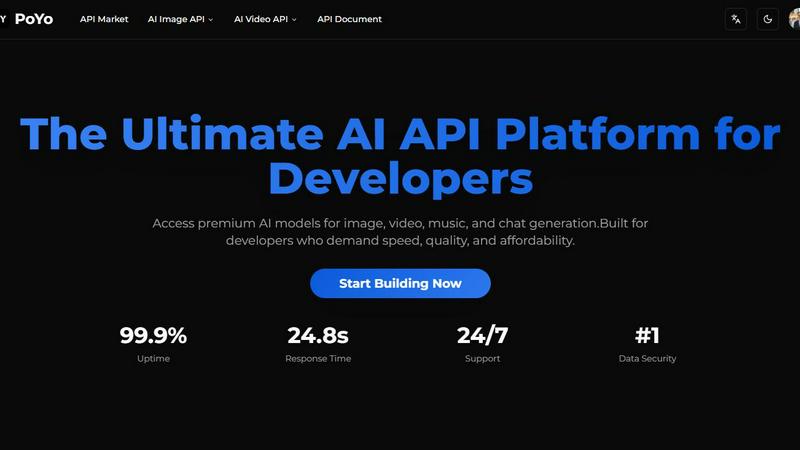
PoYo API evolves your projects with unified access to premium AI models for image, video, music, and chat.
Last updated: February 28, 2026

RedVeil
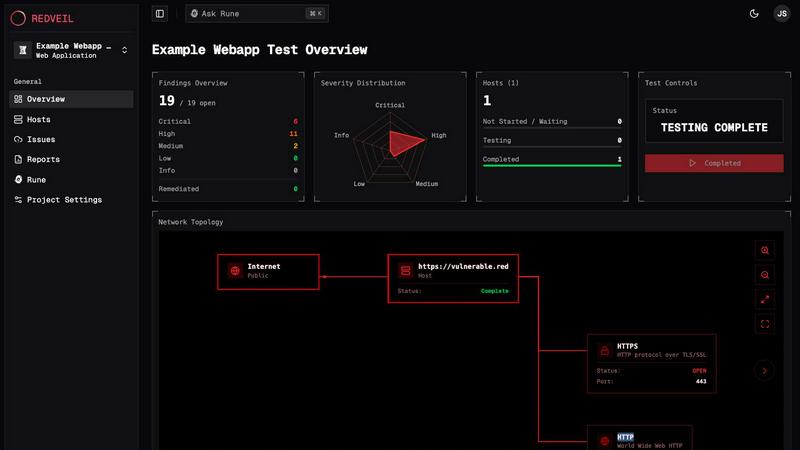
RedVeil evolves your security with AI agents that perform on-demand penetration testing.
Last updated: February 28, 2026
Visual Comparison
PoYo API
RedVeil
Feature Comparison
PoYo API
Unified Multi-Model Gateway
PoYo API provides a single integration point for over 500 cutting-edge AI models across image, video, music, and chat generation. This eliminates the need to source, manage, and pay for multiple APIs from different providers. Developers can seamlessly switch between models like Nano Banana for images, Sora 2 for video, Suno for music, and Claude Sonnet for chat through one consistent interface, dramatically accelerating development cycles and simplifying the entire AI stack management process.
Credit-Based, Subscription-Free Pricing
The platform operates on a flexible, growth-oriented credit system where you only pay for what you use, with no mandatory recurring subscriptions. Credits are purchased once and never expire, allowing projects to scale up or down based on actual demand without financial lock-in. This model is ideal for startups and enterprises alike, supporting the journey from initial prototype to full-scale production without the friction of unpredictable or escalating monthly costs.
Enterprise-Grade Reliability & Support
PoYo API is built on a foundation of robustness, guaranteeing 99.9% uptime and offering ultra-low latency responses, often under 50ms. It includes 24/7 monitoring and access to dedicated technical support, not automated bots, ensuring any issues are resolved promptly. This enterprise-level reliability is crucial for applications that move beyond the testing phase and require a stable, always-available infrastructure for their users.
Developer-First Tools & Playground
To accelerate the development lifecycle, PoYo provides a comprehensive free playground for testing all models without requiring a credit card. Developers can experiment with parameters, debug responses, and validate outputs before writing a single line of integration code. Coupled with a simple two-endpoint async API design for task submission and querying, the platform ensures you can progress from concept to functional integration in minutes.
RedVeil
Autonomous AI Attack Agents
RedVeil deploys intelligent AI agents trained to reason through complex, multi-step attack chains just like a human adversary. These agents don't just run simple scans; they identify, exploit, and validate real security vulnerabilities, uncovering interconnected attack paths that reveal the true impact of a flaw. This provides depth and context far beyond automated vulnerability scanners, delivering findings with clear evidence and reproduction steps.
On-Demand Testing & One-Click Retesting
Eliminate the lengthy scheduling and scoping calls of traditional pentests. With RedVeil, you can start a comprehensive test whenever you need it—post-deployment, before a release, or for a compliance audit—in just minutes. The platform's one-click retesting capability allows you to validate fixes immediately at your own pace, turning security into a continuous, integrated process rather than an annual event.
Compliance-Ready Reporting Engine
Generate professional, detailed reports tailored for every stakeholder with a single click. RedVeil's reports are structured to meet the stringent requirements of major frameworks like SOC 2, ISO 27001, and PCI-DSS. They provide executive summaries, technical details for engineers, and clear remediation guidance, ensuring your team is always prepared for an audit without last-minute scrambling.
Guided Remediation & Expert Support (Rune)
Beyond identifying issues, RedVeil helps you fix them. The platform includes Rune, an expert support system that provides clarity on findings, breaks down complex attack paths in plain language, and offers guided remediation advice. Rune can also assist with initial scope setup and post-test audit preparation, acting as a continuous security partner.
Use Cases
PoYo API
Scalable Content Creation Platforms
Startups and SaaS companies building the next wave of content creation tools can leverage PoYo API to offer diverse AI generation features—from marketing images and social media videos to custom music tracks—all through a single, integrated backend. This allows them to rapidly prototype new features, scale user capacity without managing multiple vendor relationships, and maintain a consistent, high-quality output as their user base grows exponentially.
Advanced AI-Powered Chat Applications
Developers creating sophisticated conversational agents, customer support bots, or interactive storytelling apps can utilize the unified chat API to access top-tier models like GPT-5, Claude Sonnet, and Gemini. This enables easy A/B testing of different models for optimal performance and cost, and ensures the application can evolve by instantly integrating newer, more powerful models as they become available, keeping the product at the cutting edge.
Media Production & Editing Software Integration
Software companies in the creative space can integrate PoYo's AI Video and Music APIs directly into their existing video editors, DAWs (Digital Audio Workstations), or graphic design suites. This evolution allows them to add powerful AI features like text-to-video generation, style transfer, vocal removal, or song extension, transforming their traditional software into next-generation, AI-augmented creative studios for professional users.
Rapid Prototyping & MVP Development
Entrepreneurs and indie developers can use PoYo API to quickly validate business ideas and build functional Minimum Viable Products (MVPs). The free playground and simple API allow for fast experimentation across different AI modalities without upfront investment. The credit-based pricing then supports organic growth, enabling the project to scale its AI usage precisely in line with user acquisition and funding milestones.
RedVeil
Continuous Security for DevOps/DevSecOps
Integrate penetration testing directly into your CI/CD pipeline. Development teams can launch a targeted RedVeil test after major deployments or weekly sprints to catch new vulnerabilities introduced by code changes. This shifts security left and right, enabling fast remediation and fostering a culture of continuous security improvement alongside continuous delivery.
Proactive Compliance and Audit Readiness
Prepare for annual SOC 2, ISO 27001, or PCI-DSS audits without the panic and premium of a last-minute consultant. Security and compliance teams can run RedVeil tests quarterly, monthly, or even before each audit window to identify and remediate gaps proactively, ensuring they always have a current, professional report ready for auditors.
Third-Party and Vendor Risk Assessment
Evaluate the security posture of external applications, APIs, or partner networks before integration. RedVeil provides an objective, thorough assessment that goes beyond a simple questionnaire, giving your team concrete data on potential risks in your supply chain or software dependencies.
Security Posture Validation for Growing Companies
For startups and scale-ups experiencing rapid growth, security often lags behind product development. RedVeil offers an affordable, scalable way to establish a mature security testing program. It allows small teams to access enterprise-grade penetration testing on demand, helping them build customer trust and secure funding by demonstrating robust security practices.
Pricing Comparison
PoYo API
PoYo API operates on a transparent, pay-as-you-go credit system. You purchase credits upfront, which never expire, and consume them based on the model used. For example, generating an image with the popular Nano Banana 2 model costs $0.025 per task, while the advanced Sora 2 Pro video model costs $0.50 per generation. This model provides clear cost predictability and flexibility, allowing projects to progress from low-volume testing to high-volume production without being locked into rigid subscription tiers. All pricing is detailed on the model pages, and you can start building immediately with free playground access.
RedVeil
RedVeil offers transparent, predictable annual subscription plans based on a measured "Agent Ops" effort model:
Perimeter Plan ($2,995/year): Ideal for startups and core compliance needs. Includes 500 Agent Ops annually for external web and network testing, along with compliance-ready reporting.
Full Coverage Plan ($6,995/year): The most popular plan for growing businesses. Includes 2,500 Agent Ops annually, covering all Perimeter features with the future addition of internal network testing and priority support.
Enterprise Plan (Custom Pricing): Designed for complex, multi-tiered scopes. Includes a custom allocation of Agent Ops, advanced integrations (SSO/SCIM, Jira), dedicated support, and formal SLAs.
Overview
About PoYo API
PoYo API represents the definitive evolutionary leap in AI development infrastructure, designed for builders who are progressing from fragmented prototypes to scalable, production-ready applications. It is a unified API gateway that consolidates access to over 500 premium AI models across the critical domains of image, video, music, and chat generation. This platform eliminates the developmental friction of managing dozens of separate vendor keys, subscriptions, and inconsistent integration protocols, providing a single, reliable point of access. Its core value proposition is empowering scalable innovation: developers and businesses can start with a simple idea and grow it into a robust application without hitting infrastructural or financial roadblocks. With a flexible, credit-based pricing model free from recurring subscriptions, projects can evolve organically. Backed by enterprise-grade security, consistent 99.9% uptime, and dedicated 24/7 support, PoYo API is the foundational layer upon which the next generation of ambitious AI applications are built and thrive, allowing teams to focus entirely on creation and growth rather than complex configuration.
About RedVeil
RedVeil represents the next evolutionary stage in cybersecurity, moving beyond the slow, manual, and expensive penetration testing models of the past. It is an AI-powered penetration testing platform designed for modern engineering teams who deploy code daily and cannot afford to wait weeks for a consultant's point-in-time snapshot. RedVeil operationalizes penetration testing by combining the deep, contextual reasoning of a human hacker with the speed, scalability, and consistency of autonomous software. Security teams can spin up a full, comprehensive test in minutes and receive a detailed, actionable, and audit-ready report within hours, not weeks. This platform is built for startups, growing businesses, and enterprise teams that need to integrate continuous security validation into their DevOps lifecycle, ensuring their defenses evolve as rapidly as their codebase. RedVeil's core value proposition is delivering proven, high-quality security assessments at a fraction of the traditional cost and time, enabling proactive risk management and seamless compliance.
Frequently Asked Questions
PoYo API FAQ
How does the credit-based pricing work?
PoYo API uses a flexible credit system where you purchase credits upfront. Each AI model has a cost per task (e.g., $0.025 for an image generation with Nano Banana 2). You are only charged the corresponding credit amount when you successfully use a model. There are no monthly subscriptions or recurring fees; purchased credits never expire, giving you complete control over your spending and allowing you to scale usage up or down based on your project's actual growth trajectory.
Can I test the models before purchasing credits?
Absolutely. PoYo API offers a completely free playground on its model pages. You can experiment with every available image, video, music, and chat model, fine-tuning parameters and seeing real results without needing an API key or a credit card. This is designed to help developers progress from experimentation to integration confidently, ensuring the chosen models meet their specific quality and functionality requirements before any commitment.
What happens if a generation task fails?
PoYo API is built for reliability. In the rare event a generation task fails due to a system issue, you are not charged any credits for that attempt. The platform provides manual retry options directly from your dashboard, and for automated workflows, it supports webhook callbacks to notify your application of task status. This ensures you only pay for successful outputs, protecting your development budget and maintaining trust as you scale.
How do you ensure the security of my API keys and data?
Security is foundational. PoYo API employs enterprise-grade measures, storing all API keys in an encrypted format using industry-standard protocols. We operate on a zero-knowledge architecture principle where possible, meaning your sensitive credentials are fully protected. Additionally, the platform provides full audit logging for all API activities, enabling compliance monitoring and giving you complete visibility into how your integration is being used as your application evolves.
RedVeil FAQ
Does RedVeil perform a real penetration test?
Yes, RedVeil performs authentic penetration tests. It utilizes advanced AI agents that autonomously execute multi-step attack chains, exploit vulnerabilities, and pivot through networks to identify real, exploitable risks—mimicking the methodology and reasoning of a human ethical hacker. It goes far beyond basic vulnerability scanning to provide depth and context.
How many penetration tests can I do with my annual subscription?
Testing capacity is based on a transparent "Agent Ops" effort model. Your subscription tier (Perimeter, Full Coverage, Enterprise) includes an annual allocation of Agent Ops. You can use these ops to run multiple tests throughout the year, with the number of tests depending on the scope and complexity of each engagement. This provides flexibility to test as frequently as your environment changes.
Can I use RedVeil's reports for compliance audits (SOC 2, PCI-DSS, etc.)?
Absolutely. RedVeil's reports are specifically engineered to be audit-ready for major compliance frameworks including SOC 2, ISO 27001, and PCI-DSS. They include all necessary components such as executive summaries, detailed findings with evidence, risk ratings, and remediation recommendations required by auditors.
What if I have concerns about submitting my report to my auditor?
RedVeil is designed to provide high-assurance reports that stand up to auditor scrutiny. The platform documents its AI-driven methodology and provides clear evidence for each finding. For additional assurance, the enterprise plan includes dedicated support and SLAs, and teams can leverage Rune for expert guidance on presenting findings to auditors.
Alternatives
PoYo API Alternatives
PoYo API is a unified AI development platform, specifically designed as an API gateway for AI Assistants and multi-modal applications. It provides a single point of access to a vast library of premium models for image, video, music, and chat generation, streamlining the development process. Developers often explore alternatives to find a solution that aligns with their project's specific evolutionary stage. This search can be driven by budget constraints, the need for different model specializations, or platform requirements that demand a different architectural approach or integration method. When evaluating options, consider the scope of model access, pricing flexibility, and platform reliability. The ideal alternative should support your project's growth trajectory, offering a scalable infrastructure that evolves with your needs from prototype to production without imposing restrictive financial or technical barriers.
RedVeil Alternatives
RedVeil is an AI-driven penetration testing platform that automates security assessments, delivering audit-ready reports in hours instead of weeks. It belongs to the emerging category of agentic AI security tools designed for modern, fast-paced engineering teams. Users often explore alternatives for various reasons, such as budget constraints, specific feature requirements like integration capabilities, or a preference for different testing methodologies. Some may seek a hybrid human-AI approach or have compliance needs that require a particular vendor structure. When evaluating options, consider the core value: the ability to find real vulnerabilities efficiently. Key factors include testing depth and accuracy, reporting quality for audits, pricing transparency, and how well the tool fits into continuous deployment cycles. The goal is to find a solution that provides actionable security insights at the speed of your development.