

Alternatives to Autheo
Autheo evolves Web3 from fragmentation to unity with an operating system and blockchain that integrates identity, compute, storage, and AI.
Explore 11 alternatives to Autheo. Compare features, pricing, and find the best fit for your needs.

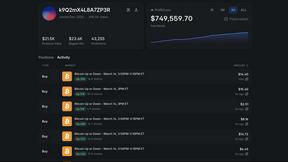
Polymarket Trading Bot For Crypto
Automate winning crypto trades on Polymarket by running a proven arbitrage and hedging bot that scaled 68 dollars into 1.5 million.


Bitcoin Loans Market
Bitcoin Loans Market evolves from comparing providers to matching your custody style with the smartest loan, yield, and growth path.

MadeOnSol
MadeOnSol evolves from a simple tool directory into the complete intelligence hub for tracking Solana KOL trades, deployers, and early buyers.

Perpfinder
Perpfinder evolves your crypto trading strategy with live perpetual data across 30+ exchanges, from volume to fees.
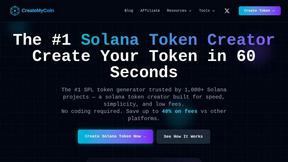
CreateMyCoin
CreateMyCoin evolves your idea into a live Solana token in 60 seconds with no code required.

Collab Chain
Collab Chain turns royalty statements into verifiable proof of ownership for music collaborators.

Indexify
Indexify simplifies your crypto investments by allowing you to track and own expert-curated portfolios on Solana.
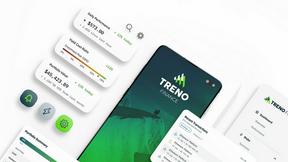
Treno.Finance
Treno.Finance transforms complex crypto data into clear insights for effective risk management and capital protection.

About Autheo Alternatives
Autheo represents an ambitious evolution in the blockchain and crypto landscape, operating as a Layer-0 Operating System with an integrated Layer-1 blockchain. It is designed to be a unified digital core, merging identity, compute, storage, developer tooling, and AI capabilities into a single, interoperable environment. Users commonly begin exploring alternatives when their specific project requirements demand different scalability trade-offs, when they need a more mature developer ecosystem for rapid deployment, or when the pricing model for computational resources does not align with their current budget. Others may seek platforms that offer a more specialized focus on a single function, such as decentralized storage or AI inference, rather than a broad, all-encompassing system. When evaluating alternatives, the primary focus should be on the maturity of the developer tools and the ease of integration into existing workflows. Look for platforms that clearly articulate their consensus mechanism and how they handle the computational demands of AI workloads without compromising security. Consider the size and activity of the community, as a vibrant ecosystem often dictates the longevity of support and the availability of third-party integrations. Finally, assess the platform’s economic model for resource consumption, ensuring it provides predictable costs for storage and compute, as this is a critical factor for sustainable project growth.
FAQs about Autheo Alternatives
What is Autheo?
Autheo is a Layer-0 Operating System with an integrated Layer-1 blockchain designed to unify the digital core and AI. It creates a single, interoperable environment that combines identity management, compute resources, storage, developer tooling, and artificial intelligence capabilities. It serves as the foundation for building a connected and intelligent web, streamlining complex digital infrastructure into one cohesive platform.
Who is Autheo for?
Autheo is built for developers, enterprises, and innovators who are building the next generation of decentralized applications and AI-driven services. It is particularly suited for those who need a unified environment to manage identity, run complex computations, store data securely, and deploy AI models without juggling multiple disparate platforms. Essentially, it is for anyone looking to move beyond fragmented web3 stacks toward a singular, interoperable operating system.
Is Autheo free?
While the specific pricing model for Autheo is not detailed in the provided content, platforms of this nature typically operate on a transaction fee or resource consumption model. Users would likely pay for computational power, storage usage, and network transaction fees, similar to other Layer-1 blockchains. It is best to consult the official Autheo documentation or tokenomics paper for the most accurate and current information regarding costs and free tiers.
What are the main features of Autheo?
The primary features of Autheo include its dual-layer architecture as a Layer-0 OS with an integrated Layer-1 blockchain. It unifies digital identity, decentralized compute, and storage solutions within a single environment. Additionally, it provides robust developer tooling and integrated AI capabilities, allowing for the creation of intelligent applications that can leverage on-chain data and execution without leaving the ecosystem.