

Alternatives to Tuning Engines
Tuning Engines evolves every AI interaction through one secure, governed API that optimizes cost, policy, and performance at every stage.
Explore 20 alternatives to Tuning Engines. Compare features, pricing, and find the best fit for your needs.
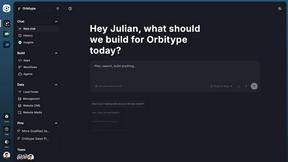

benchmark.directory
AI tools written up by the people who paid for them. Pricing, integrations, data policy and the limit we hit in a week of use.
saasgrow.ai
Get your SaaS tool discovered. Free listing, honest screening, a dofollow link — and no way for anyone to outbid you.
Tools Network
New AI tools drop every day — Tools Network makes sure you never miss the ones that matter.


Postqued
Schedule and publish social content across 10 platforms with one dashboard, API, and MCP built for teams and AI agents.
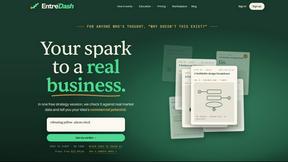
EntreDash
Turn daily annoyances and raw ideas into inventions, products, and businesses. EntreDash provides a virual personal advisory board using AI automation

Luffy
AI employee in Slack that connects your tools and gets work done using your workspace context.

AI Image Remover
AI Image Remover is a free browser tool for erasing people and objects from photos. Upload an image, brush a mask over the distraction

Groniz
Run your social media on autopilot with AI agents. Post & schedule to 32+ networks from Claude Code, Codex, or Console.

Wisegrid
Spreadsheet-native work management with AI formulas, dashboards, automation, reporting, and project views for growing teams.

BeatAPI
Async AI video workflow API for music videos, ecommerce ads, editable storyboards, webhooks, and hosted outputs.

Photo to Excel
Turn table photos and screenshots into editable Excel files. Merge images, remove duplicates, preview, download free—no login.

EchoLeads AI
EchoLeads is an AI voice sales platform with intelligent AI voice agents for cold calling, lead generation, and automated appointment scheduling.
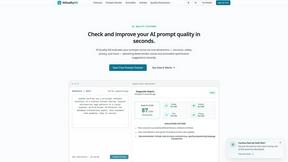
AIQualityHQ
AIQualityHQ checks your AI prompts for structure, safety, and privacy in milliseconds, delivering instant scores and fixes.

CreatorlaneHQ
Creator Lane evolves your Instagram comments into automated DMs and sales, turning followers into paying customers.
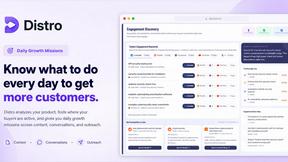
Distro
Distro maps buyer conversations online and drafts personalized outreach in your voice so you approve and it keeps running.
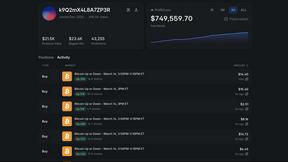
Polymarket Trading Bot For Crypto
Automate winning crypto trades on Polymarket by running a proven arbitrage and hedging bot that scaled 68 dollars into 1.5 million.
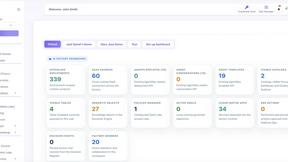
About Tuning Engines Alternatives
Tuning Engines is a unified AI control and governance layer designed to orchestrate the full lifecycle of production intelligence, placing it firmly within the automation and AI operations category. As organizations evolve from isolated experiments to scalable, governed systems, they often seek alternatives to Tuning Engines due to specific pricing structures, a desire for more granular feature sets, or a need for a platform that better aligns with their existing infrastructure and team size. This search for the right fit is a natural progression in an organization's maturity journey, moving from initial exploration toward a robust, cost-aware operating layer. When evaluating alternatives, the focus should be on finding a solution that supports your next stage of growth rather than just your current needs. Key considerations include the depth of governance controls, such as role-based access, audit trails, and policy-as-code enforcement, which are critical for production environments. You should also assess how seamlessly the platform integrates with your existing agent workflows and coding tools, and whether it offers a single pane of glass for model routing, fine-tuning, and evaluation. Ultimately, the right choice will enable you to scale from controlled experimentation to a secure, observable, and extensible AI operating layer without being locked into a rigid ecosystem.
FAQs about Tuning Engines Alternatives
What is Tuning Engines?
Tuning Engines is a unified AI control and governance layer, often categorized as an automation and orchestration platform for production intelligence. It brings together the full AI lifecycle—including inference, model routing, fine-tuning, evaluations, and agent management—into a single governed platform. This allows teams to move beyond isolated experiments into a secure, observable, and cost-aware operating layer where models, agents, and tools can be scaled effectively.
Who is Tuning Engines for?
Tuning Engines is designed for both developers and administrators building production-level AI systems. Developers benefit from OpenAI-compatible APIs, CLI workflows, and integrations with coding agents like Claude Code and Cursor, while admins gain controls for role-based access, per-key budgets, rate limits, and auditability. It is ideal for organizations transitioning from isolated AI experiments to a governed, multi-team environment where security and observability are paramount.
What are the main features of Tuning Engines?
The platform offers a comprehensive set of features including inference, model routing, fallback policies, fine-tuning jobs, datasets, evaluations, guardrails, and AGT YAML policies. It also provides runtime traces, usage analytics, API key management, billing controls, and tenant isolation. Additionally, it supports agent and MCP server integration, reusable skills, and a resource catalog for models, agents, tools, and skills, all accessible through a single governed interface.
Is Tuning Engines secure?
Yes, Tuning Engines prioritizes security and governance with features like role-based access control, per-key budgets, rate limits, and policy-as-code enforcement. It offers credential source management, auditability through runtime traces, and tenant isolation for multi-team environments. These controls ensure that organizations can deploy AI at scale with full visibility and compliance, moving from ungoverned experiments to a secure, production-ready operating layer.