
Ark vs CCAPI
Side-by-side comparison to help you choose the right tool.

Ark is the white-label email API built for platforms to manage every customer domain.
Last updated: February 28, 2026

CCAPI
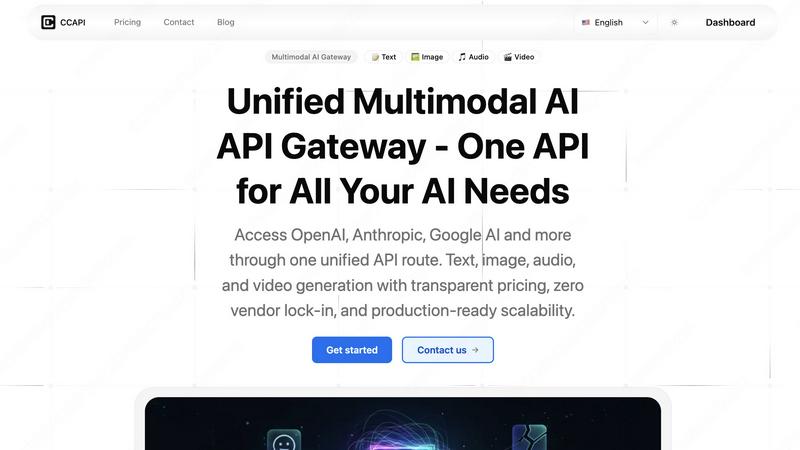
CCAPI evolves your AI workflow with one unified gateway for all major models, ensuring constant uptime.
Last updated: February 28, 2026
Visual Comparison
Ark
CCAPI
Feature Comparison
Ark
Native Multi-Tenant Architecture
Ark is fundamentally built for platforms serving multiple customers, making tenant isolation the default, not an afterthought. Each customer gets completely segregated domains, sending logs, analytics, and debugging data. This architecture eliminates the need to build complex permission and data isolation layers on top of a generic email API, providing immediate security and organizational clarity as you scale your customer base.
AI-First API & MCP Server
Designed for the future of development, Ark offers an AI-readable API that reduces token usage by up to 10x, making it efficient for AI models to parse and use. Furthermore, its native Model Context Protocol (MCP) server with 26 tools allows AI assistants like Claude, Cursor, and Windsurf to send and manage emails using natural language commands, removing the need for cumbersome wrapper code and accelerating AI-integrated feature development.
Automated Domain & DNS Management
Onboarding new customer domains is streamlined from a multi-day support ticket to a two-minute self-service process. Ark automatically detects the customer's DNS provider (e.g., Cloudflare, GoDaddy, Route53) and provides them with exact, simple instructions. For some providers, it can even configure records automatically, virtually eliminating the support burden and technical friction of domain verification.
White-Label Customer Isolation Dashboard
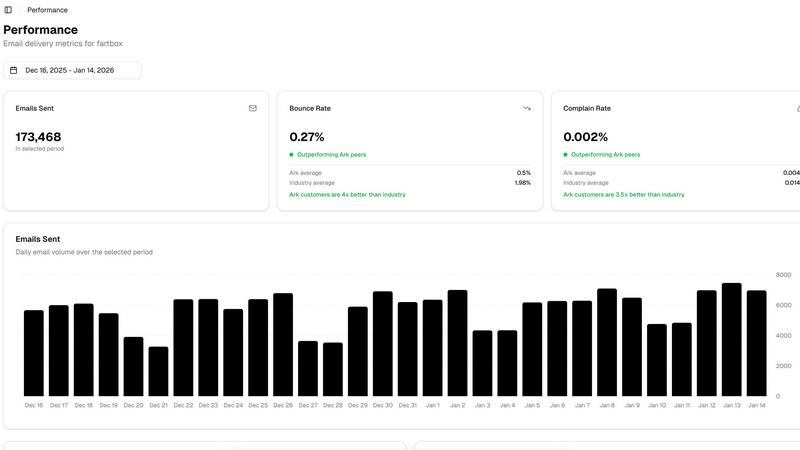
Platforms get a centralized dashboard to manage every customer domain from a single interface. This provides clear visibility into the status, email volume, and deliverability rates for each tenant. When a customer reports an issue, you can instantly drill into their specific logs and analytics to diagnose problems, turning email debugging from a needle-in-a-haystack search into a straightforward process.
CCAPI
Unified Multimodal API
CCAPI consolidates access to a vast ecosystem of AI models across text, image, audio, and video generation into a single, consistent API endpoint. Instead of learning and integrating the unique quirks of each provider's interface, developers interact with one standardized, OpenAI-compatible protocol. This dramatically simplifies codebases, reduces development time, and allows teams to effortlessly experiment with and switch between the latest models from companies like OpenAI, Anthropic, Google, and cutting-edge video specialists like Kuaishou (Kling 3.0) and ByteDance (Seedance 2.0) without changing their core application logic.
Intelligent Smart Routing & Auto-Failover
This feature is the engineering backbone that guarantees the "Always On" service level. CCAPI's smart router continuously monitors the health and performance of all connected AI providers. If a request to one provider fails or times out, the system automatically and seamlessly reroutes the request to an alternative provider in approximately 120 milliseconds. This multi-layered retry logic ensures that your end-users never experience downtime due to a third-party API outage, transforming potential application failures into mere blips handled gracefully under the hood.
OpenAI-Compatible Endpoint
Adoption is designed to be instantaneous. CCAPI's API is fully compatible with the OpenAI SDK specification. For developers, integration is as simple as changing the baseURL in their existing OpenAI client configuration to https://api.ccapi.ai/v1. This means all existing code, patterns, and SDKs (like the official OpenAI Node.js or Python libraries) work immediately, requiring zero rewrite or migration effort. It's a plug-and-play upgrade that unlocks a world of models without technical debt.
Transparent Usage & Cost Dashboard
CCAPI provides developers with complete financial and operational visibility. The dashboard offers real-time metrics on costs, per-request latency, and success rates across all providers and models. You track exactly how much you spend on each model, like GPT-5.2 or Claude 4.6, in real USD. This transparency, combined with the pay-as-you-go model (where $100 deposited equals $100 of usable balance), eliminates subscription lock-in and confusing credit systems, putting developers in full control of their AI spending.
Use Cases
Ark
CRM & Customer Engagement Platforms
CRMs require sending notifications, follow-ups, and campaign emails that must appear directly from the client's domain to maintain brand trust and professionalism. Ark enables these platforms to offer seamless white-label email, allowing each business customer to send from addresses like [email protected], with all domain management and deliverability handled automatically behind the scenes.
Invoicing & Billing Software
Financial communications demand high trust and deliverability. Invoicing tools use Ark to send bills, payment reminders, and receipts from authenticated customer domains (e.g., [email protected]). This ensures critical financial emails reach the inbox, not spam, and reinforces the software as an integrated part of the client's business operations.
Scheduling & Booking Applications
Scheduling apps send confirmations, reminders, and updates. With Ark, these emails come from the business's own domain (e.g., [email protected]), enhancing legitimacy and reducing no-shows. The automated DNS setup allows consultants, doctors, or service providers to connect their domain without requiring technical support from the platform's team.
Helpdesk & Support Ticketing Systems
Helpdesk software needs to send ticket updates and resolutions from the customer's support domain. Ark provides the isolated, per-customer email infrastructure required for this, ensuring all correspondence is properly authenticated under the client's brand. This creates a seamless support experience for the end-user and simplifies compliance and logging for the platform.
CCAPI
Building Resilient Production Applications
For startups and enterprises running customer-facing AI features, downtime is not an option. CCAPI is essential for ensuring application resilience. By leveraging its smart routing and auto-failover, developers can guarantee that their chat assistants, content generators, or analysis tools remain operational even if a primary AI provider like OpenAI experiences an outage. This builds robust, professional-grade applications that users can trust 24/7.
Rapid AI Model Prototyping and Evaluation
AI teams and researchers can use CCAPI as a testing ground to rapidly prototype with and evaluate the latest models. With instant access to new releases like GLM-5, MiniMax M2.5, and the GPT-5 series without waitlists, teams can benchmark performance, quality, and cost across multiple providers from a single codebase. This accelerates the R&D cycle, allowing for data-driven decisions on which model is best suited for a specific task.
Consolidating Multi-Modal AI Workflows
Companies developing complex applications that require more than just text—such as generating marketing videos, creating audio narrations, and designing images—can streamline their entire stack with CCAPI. Instead of maintaining separate integrations for video (Runway, Kling), audio (ElevenLabs), and image (Stability AI, Midjourney) APIs, they can manage all modalities through one unified gateway, simplifying billing, monitoring, and code maintenance.
Cost-Optimized AI Operations
Development teams with variable or scaling AI needs benefit from CCAPI's model aggregation and transparent pricing. Engineers can programmatically route less critical tasks to high-value models like DeepSeek V4 for cost savings, while reserving premium models like Claude 4.6 for mission-critical reasoning, all within the same API flow. The unified dashboard provides the insights needed to continuously optimize spending without sacrificing capability.
Overview
About Ark
Ark is the definitive evolution of email infrastructure for modern software platforms. It moves beyond the limitations of single-sender APIs to provide a native, white-label email solution built for the multi-tenant reality of today's SaaS products. If you're building a CRM, helpdesk, invoicing tool, scheduling app, or any platform where your customers need to send email under their own brand, Ark is your foundational layer. It eliminates the monumental burden of managing hundreds or thousands of customer domains, SPF/DKIM configurations, and isolated logging. By integrating Ark, developers transition from building and maintaining complex email systems to simply enabling the feature, allowing teams to refocus their energy on their core product innovation. With AI-first design principles, including an AI-readable API and a native MCP server with 26 tools, Ark also empowers the next wave of development, letting AI agents like Claude manage email workflows through natural language. From seamless DNS auto-configuration to per-tenant analytics, Ark is engineered for platforms that are scaling from their first customer to their thousandth, ensuring professional, deliverable email is a solved problem, not a perpetual engineering hurdle.
About CCAPI
CCAPI represents the next evolution in developer-centric AI infrastructure, transforming the chaotic landscape of multiple AI providers into a single, unified, and resilient gateway. It is a multimodal AI gateway designed for developers and engineering teams who demand reliability, simplicity, and choice. At its core, CCAPI aggregates access to leading AI providers like OpenAI, Anthropic, Google AI, DeepSeek, ByteDance, and Kuaishou under one OpenAI-compatible endpoint. This eliminates the need to manage separate API keys, SDKs, and integration logic for each service. The platform's "Always On" promise is powered by intelligent smart routing that automatically fails over to healthy providers in the event of an outage, ensuring a 99.9% success rate for your application's requests. Whether you're generating text, creating images, synthesizing audio, or producing video, CCAPI provides a consistent interface for all four modalities. It marks a shift from wrestling with fragmented APIs to shipping features with confidence, backed by 24/7 monitoring and a pay-as-you-go model that puts real USD balance ahead of confusing credit systems.
Frequently Asked Questions
Ark FAQ
How is Ark different from Resend or SendGrid?
Ark is purpose-built for multi-tenant platforms, while services like Resend, SendGrid, or Amazon SES are designed primarily for a single company to send from its own domains. With Ark, multi-tenancy, per-customer domain management, and isolated logs are core, built-in features. Using a single-sender tool for a platform requires building complex isolation and management layers on top of their API, which Ark provides natively.
What does "AI-readable API" mean?
Ark's documentation and API structure are specifically optimized for consumption by Large Language Models (LLMs). This design reduces the number of tokens (data chunks) an AI needs to process to understand how to use Ark by up to 10 times. This makes it faster, cheaper, and more reliable for AI agents like Claude to interact with the email API and execute commands correctly.
How does the domain onboarding process work for my customers?
When a customer in your platform needs to add their domain, Ark provides a simple interface. It automatically detects their DNS provider and gives them clear, step-by-step instructions tailored to their provider's interface (e.g., GoDaddy, Cloudflare). For supported providers, it can even auto-configure the necessary DNS records. This makes the process self-service, drastically reducing support tickets for your team.
Can I see logs and analytics for individual customers?
Yes, absolutely. Customer isolation is a core principle of Ark. Your platform's dashboard allows you to view and search through sending logs, delivery statuses, and analytics (like open rates) on a per-customer basis. This means you can instantly investigate if "Customer #204" reports an issue without sifting through logs from all your other clients.
CCAPI FAQ
How do I get started with CCAPI?
Getting started is designed to be immediate. Simply sign up for an account, which provides instant API access with no waitlist. You will receive your CCAPI key. Then, in your existing code using an OpenAI SDK, change the base URL to https://api.ccapi.ai/v1 and replace your API key with the one provided by CCAPI. Your first request is now routed through the gateway. You can fund your account with USD to begin making calls.
What happens when an AI provider is down?
CCAPI's smart routing system handles this automatically. The gateway constantly monitors all providers. If a request to your specified model (or its primary provider) fails or times out, the system will instantly (in about 120ms) retry the request using an equivalent alternative model from a different, healthy provider. This failover process is seamless and requires no action or code changes on your part, ensuring your application's success rate remains high.
Can I use my own API keys with CCAPI?
Yes, CCAPI offers a "Custom Providers" feature. You can bring your own API keys from providers like OpenAI or Anthropic and configure them within your CCAPI dashboard. This allows you to use CCAPI's unified interface, smart routing, failover capabilities, and monitoring dashboard even while billing directly with the underlying provider, offering maximum flexibility for your setup.
Is there a free tier or trial?
CCAPI operates on a transparent pay-as-you-go model. You deposit real USD (e.g., $100) which becomes your usable balance. There are no monthly subscriptions or hidden fees. You only pay for the API calls you make, priced based on the cost of the underlying AI model used. This model functions like a trial, as you can start with a small amount to test the service. The website also mentions a "Get started free" option, which likely provides an initial credit for new users to explore the platform.
Alternatives
Ark Alternatives
Ark is an AI-first email API, a specialized tool in the development category designed to integrate transactional email functionality into applications with a focus on automation and developer experience. It caters to builders who prioritize seamless AI agent workflows and rapid feature deployment. Developers may explore alternatives for various reasons, such as aligning with specific budget constraints, requiring different feature sets like broader email marketing capabilities, or needing compatibility with a particular hosting environment or tech stack that isn't natively supported. When evaluating other options, it's crucial to assess core needs: the required speed and reliability of email delivery, the depth of API and documentation designed for modern development practices, the simplicity of integration into your existing workflow, and a transparent, scalable pricing structure that matches your usage patterns.
CCAPI Alternatives
CCAPI is a unified multimodal AI API gateway, a developer tool that provides a single integration point for accessing multiple leading AI models. It belongs to the development and API management category, simplifying the process of connecting applications to various AI services like text, image, and audio generators. Developers often explore alternatives for several practical reasons. These can include specific budget constraints, the need for a different feature set like specialized model support or unique deployment options, or a requirement to align with a particular cloud platform or existing tech stack. The search is typically driven by project evolution and the need for a perfect technical fit. When evaluating an alternative, focus on core requirements. Key considerations should be the breadth and quality of the underlying AI models supported, the simplicity and robustness of the API design, the clarity and scalability of the pricing model, and the overall reliability and performance of the gateway service. The goal is to find a solution that grows with your application's needs.