
Disavow.ai vs TinyHunt
Side-by-side comparison to help you choose the right tool.

Disavow.ai
Find toxic links, disavow. Easy & budget-friendly.

TinyHunt
Launch your indie project to earn a badge and powerful backlinks that boost your growth.
Last updated: March 1, 2026
Visual Comparison
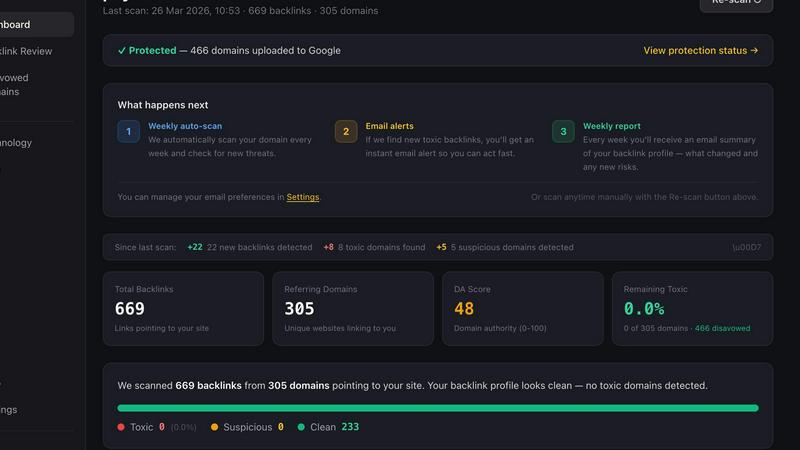
Disavow.ai
TinyHunt
Overview
About Disavow.ai
Every website picks up backlinks it didn't ask for — spam networks, link farms, scraper sites. When they cause a Google penalty or tank your rankings, you need to act fast. Disavow.ai scans your backlink profile, classifies every linking domain as clean, suspicious, or toxic using a 4-layer Smart Risk Engine, and generates the exact file Google needs to ignore the bad ones. Toxic domains are grouped into plain-English categories — Spam & Link Farms, Private Blog Networks, Known Spam Patterns, Risky Extensions, and Near-Zero Authority — each showing exactly why it was flagged. No SEO jargon, no black-box scores. Free tier lets you scan and see 15 backlinks. Pro at $39/mo gives you unlimited backlinks, full export, and weekly auto-scans. That's 70% less than Semrush for the same core functionality.
About TinyHunt
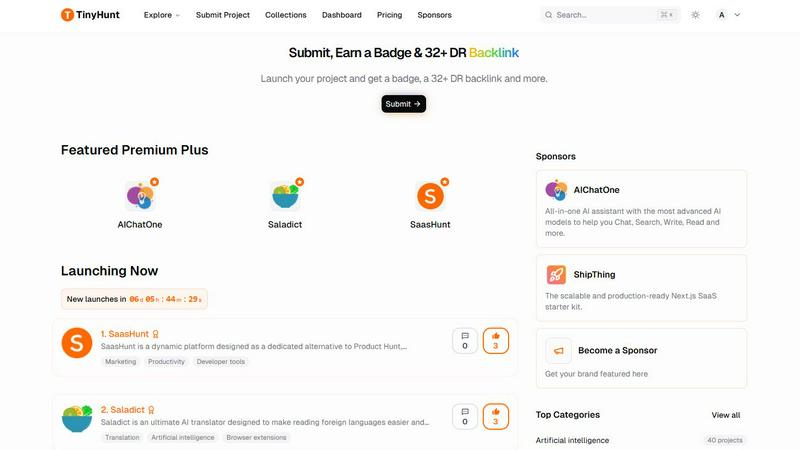
TinyHunt represents a pivotal evolution in how we discover and validate new software tools. It is a curated, growth-focused marketplace designed to elevate the signal above the noise in the startup and indie maker ecosystem. The platform operates on a deliberate, weekly cadence, featuring a single, promising product for an entire week. This methodical approach transforms the chaotic process of product discovery into a structured journey of exploration. For users—be they founders, developers, or productivity-seeking professionals—TinyHunt provides a trusted source for cutting-edge solutions that can accelerate their own growth. For builders, it offers a critical launchpad, moving beyond mere listing to providing sustained visibility, meaningful community feedback, and valuable backlinks. TinyHunt is more than a directory; it's a growth partner, fostering a community where discovery is intentional, feedback is constructive, and every featured product gets the focused attention it needs to evolve and succeed.