
evenus vs OpenMark AI
Side-by-side comparison to help you choose the right tool.

AI reveals relationship loads for true fairness.

OpenMark AI evolves your AI strategy by benchmarking over 100 models on your actual task for cost, speed, and quality.
Last updated: March 26, 2026
Visual Comparison
evenus
OpenMark AI
Overview
About evenus
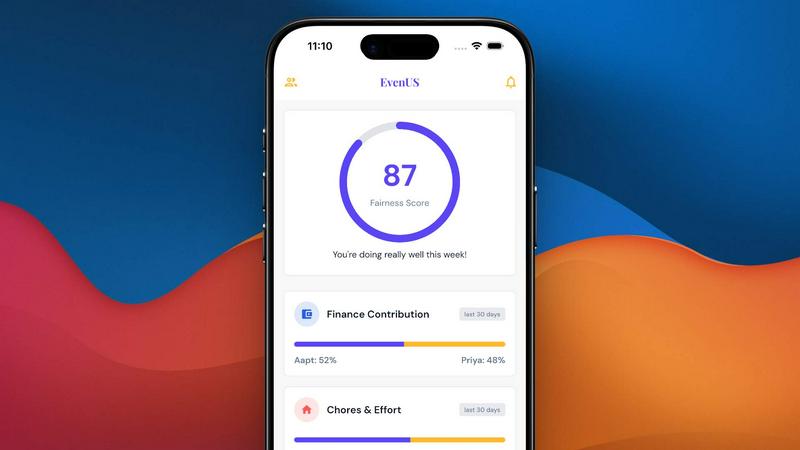
EvenUS is a fairness engine for couples that combines finances, chores, and the invisible mental load into one unified dashboard. It provides AI-powered insights, a live Household Harmony Score, income-aware expense splits, effort scoring, gentle reminders, and actionable tips to rebalance without blame or arguments.
Unlike traditional spreadsheets or basic chore apps, EvenUS treats money, tasks, and cognitive labor as an interconnected system, helping couples (married or not) reduce resentment, save time, and strengthen their relationship. Features include real-time syncing between partners, mental load tracking, fairness reports with Effort Balance and Financial Balance scores, Zone Ownership, automated reminders, and seamless integrations (calendars, banks, grocery apps).
Launching soon on iOS & Android with a generous free tier.
About OpenMark AI
OpenMark AI is a pivotal evolution in the journey of AI development, moving teams from speculative guesswork to data-driven confidence. It is a comprehensive web application designed for task-level LLM benchmarking, built specifically for developers and product teams at the critical pre-deployment stage. The platform's core mission is to eliminate the costly trial-and-error phase of selecting an AI model by providing a controlled, comparative testing environment. You simply describe your specific task in plain language, and OpenMark AI executes the same prompts against a vast catalog of models in a single session. This process yields side-by-side results based on real API calls, not marketing datasheets, measuring critical metrics like cost per request, latency, scored output quality, and—crucially—stability across repeat runs. This focus on variance reveals a model's true reliability, not just a single lucky output. By using a hosted credit system, it removes the friction of configuring multiple API keys, allowing teams to progress rapidly from exploration to validation, ensuring the chosen model delivers optimal cost efficiency and consistent performance for their unique workflow before any code is shipped.