
Gaffa vs qtrl.ai
Side-by-side comparison to help you choose the right tool.

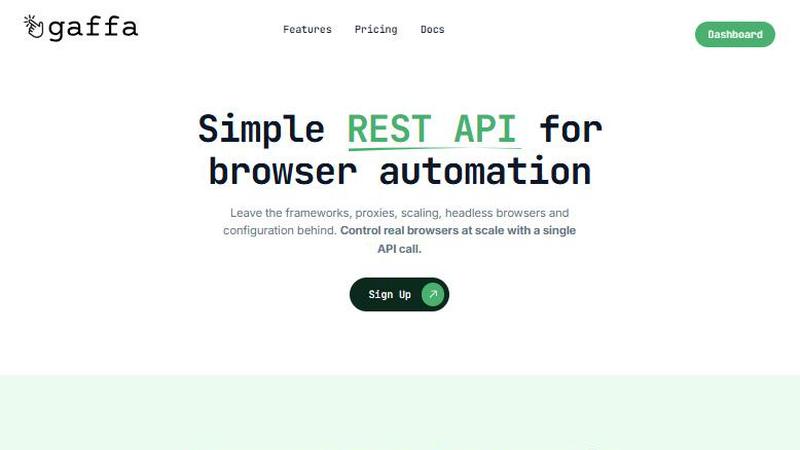
Gaffa evolves web data projects from complex coding to simple, scalable API calls.
Last updated: March 1, 2026

qtrl.ai
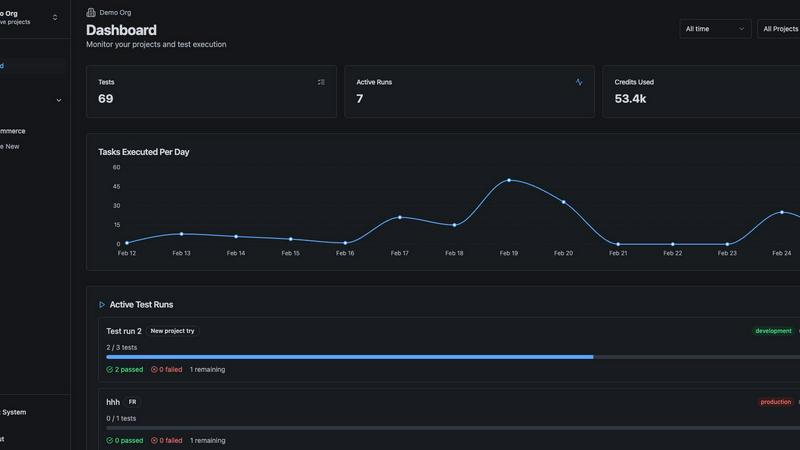
qtrl.ai empowers QA teams to seamlessly scale testing with AI while ensuring control, governance, and quality oversight.
Last updated: March 4, 2026
Visual Comparison
Gaffa
qtrl.ai
Feature Comparison
Gaffa
Simple REST API for Automation
Gaffa abstracts the complexities of frameworks like Playwright, Selenium, and Puppeteer into a straightforward REST API. This means you can control real browsers at scale with a single API call, leaving behind the need to manage frameworks, configuration, and low-level browser drivers. It dramatically reduces the learning curve and development time, allowing you to implement powerful browser automation without deep expertise in specific testing or automation libraries.
Real Browser Interaction & JavaScript Rendering
Unlike basic HTTP clients, Gaffa uses real browsers by default, ensuring full JavaScript rendering and eliminating the quirks associated with headless browsers. This guarantees that your automations interact with web pages exactly as a human user would, which is critical for navigating modern, dynamic websites that rely heavily on client-side scripts for content loading and functionality.
Built-in Global Proxy Network
Gaffa seamlessly integrates with a network of residential proxies, managed for you. You simply specify your target geographic location, and Gaffa handles the rest, providing fast and reliable access from across the world. This removes the significant operational burden of sourcing, rotating, and maintaining your own proxy infrastructure to avoid IP blocks and geo-restrictions.
Advanced Data Processing & Observability
Gaffa goes beyond fetching raw HTML. It can process page data into simplified HTML, LLM-ready markdown, or even save a self-contained offline version. Furthermore, it offers full observability by recording your automation sessions. This allows you to easily replay and debug interactions, providing clear visibility into what happened during each request, which is invaluable for maintaining robust data pipelines.
qtrl.ai
Autonomous QA Agents
qtrl.ai's Autonomous QA Agents execute instructions on demand or continuously, providing teams with the flexibility to run tests across different environments at scale. These agents operate within predefined rules, ensuring that testing adheres to organizational standards while delivering real browser execution instead of mere simulations.
Enterprise-Grade Test Management
This feature centralizes the management of test cases, plans, and runs, ensuring full traceability and audit trails. The comprehensive test management system accommodates both manual and automated workflows, making it ideal for organizations that prioritize compliance and auditability in their QA processes.
Progressive Automation
With qtrl.ai, teams can start with human-written instructions and gradually transition to AI-generated tests as they become more comfortable. The platform intelligently suggests new tests based on coverage gaps, allowing teams to review, approve, and refine tests at every step, enhancing the overall testing strategy.
Adaptive Memory
qtrl.ai builds a living knowledge base of your application that learns from exploration, test execution, and identified issues. This adaptive memory powers smarter, context-aware test generation, becoming more effective with each interaction, thus improving the efficiency of testing over time.
Use Cases
Gaffa
Competitive Intelligence and Market Research
Startups and enterprises can use Gaffa to automate the collection of pricing, product listings, and promotional data from competitor websites at scale. This provides a reliable, up-to-date stream of market intelligence to validate business strategies, track market movements, and inform critical decisions without manual, error-prone data gathering.
Building Data-Driven Products
Companies building products that rely on external web data—such as price comparison engines, lead generation platforms, or content aggregators—can use Gaffa as their core data ingestion engine. Its scalability and reliability ensure their product has a consistent and high-quality data feed, allowing the team to focus on product features and user experience instead of pipeline maintenance.
Automated Content Extraction and Archiving
Researchers, journalists, and compliance teams can leverage Gaffa to systematically scrape, archive, and convert web content into structured formats. Whether saving web pages as self-contained offline documents for legal records or converting articles into clean markdown for analysis by Large Language Models (LLMs), Gaffa automates and simplifies the entire process.
Automated Testing and Monitoring
Development and operations teams can utilize Gaffa to automate complex user journey tests on live production websites or monitor third-party service uptime and content changes. By executing real browser interactions, it can verify that critical user flows work correctly and alert teams to unexpected changes or outages on external sites they depend on.
qtrl.ai
Product-Led Engineering Teams
For product-led teams, qtrl.ai offers the tools necessary to streamline testing processes and enhance product quality. By integrating test management and intelligent automation, teams can focus on delivering features faster while maintaining high-quality standards.
QA Teams Scaling Beyond Manual Testing
QA teams that are expanding from manual testing to more automated processes will find qtrl.ai invaluable. The platform supports the transition by allowing teams to start with manual workflows and gradually adopt progressive automation, ensuring a smooth evolution.
Companies Modernizing Legacy QA Workflows
Organizations looking to modernize their outdated QA processes can leverage qtrl.ai to integrate advanced test management and automation capabilities. This modernization not only improves efficiency but also reduces the risks associated with legacy systems.
Enterprises Requiring Governance and Traceability
For enterprises that must adhere to strict compliance regulations, qtrl.ai provides essential governance features. Its robust test management and audit trails ensure that all testing activities are documented and traceable, meeting the demands of regulatory standards.
Overview
About Gaffa
Gaffa represents the next evolutionary step for developers and businesses that have outgrown the fragile, time-consuming nature of DIY web data extraction and browser automation. In the early stages of a project, managing proxies, headless browsers, and CAPTCHA-solving scripts might be a manageable hurdle. However, as your ambitions grow and you target more complex, anti-bot protected websites, these homemade systems become a major bottleneck, consuming valuable engineering resources that should be focused on core product development. Gaffa solves this by providing a sophisticated, production-ready REST API that abstracts away the entire infrastructure headache. It empowers teams to progress from simple data fetching to executing complex, human-like browser interactions at any scale, without the operational overhead. Whether you're a startup validating a market with competitive data or an enterprise building a data-driven product, Gaffa provides the reliable, scalable foundation to fuel your growth. It lets you concentrate entirely on deriving insights and value from web data, not on maintaining the fragile tools to collect it. By handling the complexities of real browsers, global proxies, scaling, and data processing, Gaffa is the engine that powers your data evolution.
About qtrl.ai
qtrl.ai is a cutting-edge quality assurance (QA) platform that empowers software teams to enhance their testing processes without compromising on governance or oversight. Designed for dynamic and fast-paced environments, qtrl.ai merges enterprise-level test management with advanced AI automation, creating a comprehensive solution for quality assurance. At its heart, qtrl.ai operates as a centralized hub that allows teams to organize test cases, schedule test runs, and ensure traceability of requirements to coverage—all backed by real-time dashboards for tracking quality metrics. This structured environment provides clear insights into testing progress, success rates, and potential risks, proving invaluable for engineering leads and QA managers.
What sets qtrl.ai apart is its innovative approach to AI integration. Rather than adopting an unpredictable "black-box" model, qtrl.ai offers a gradual introduction of intelligent automation. Teams can begin with straightforward manual test management, seamlessly transitioning to using built-in autonomous agents when they are ready. These agents can interpret plain English instructions to generate UI tests, adapt as applications evolve, and execute tests across multiple browsers and environments at scale. qtrl.ai is particularly well-suited for product-driven engineering teams, QA departments transitioning from manual testing, organizations modernizing outdated workflows, and enterprises demanding stringent compliance and audit capabilities. Ultimately, qtrl.ai aims to bridge the gap between the slow nature of manual testing and the fragility of traditional automation, presenting a reliable pathway to faster, smarter quality assurance.
Frequently Asked Questions
Gaffa FAQ
What is a credit worth and how is usage calculated?
Browser requests are charged in credits based on two primary factors: request length and proxy bandwidth. Request time is billed at 1 credit per 30 seconds (or 2 credits per 30 seconds if screen recording is enabled). Proxy usage is billed at 1500 credits per 1GB of bandwidth when a specific proxy_location is used. Each successful request deducts the corresponding credits from your monthly allowance, providing a clear and predictable cost structure for your automation workload.
Does Gaffa offer a free trial period?
Yes, Gaffa offers a free way to experiment with all key features. You can sign up and use the API to build and run automations on a dedicated demo site (demo.gaffa.dev) without requiring a credit card. This allows you to fully explore the API's capabilities, test your automation logic, and understand the platform's value before upgrading to a paid plan for use on the open internet.
What is Gaffa's refund policy?
Gaffa is happy to offer a refund if requested before any credits have been used within the current billing month. This policy ensures that customers can commit to a plan with confidence, knowing they can receive a refund if their needs change before actively consuming resources on the platform. More details are available in the full policy documentation.
Do unused credits roll over to the next month?
No, credits do not roll over from month to month. The credit allowance included with your monthly subscription plan is reset at the start of each new billing cycle. This is a common model for usage-based services and helps keep pricing simple and predictable. It's designed to align with typical monthly operational budgeting for data extraction projects.
qtrl.ai FAQ
How does qtrl.ai integrate AI into the QA process?
qtrl.ai integrates AI progressively, allowing teams to start with manual test management and gradually adopt AI-driven features. This ensures that teams maintain control while benefiting from intelligent automation.
Can qtrl.ai work with existing tools in our workflow?
Yes, qtrl.ai is designed to work with your existing tools, providing seamless integration with current workflows. This adaptability makes it easy for teams to incorporate qtrl.ai without overhauling their entire system.
What types of tests can Autonomous QA Agents execute?
The Autonomous QA Agents can execute various types of tests, including UI tests generated from plain English descriptions. They can run these tests across multiple browsers and environments, ensuring comprehensive coverage.
Is qtrl.ai suitable for organizations with strict compliance needs?
Absolutely. qtrl.ai is built with governance in mind, featuring enterprise-grade security, full agent visibility, and comprehensive audit trails to meet the compliance and traceability requirements of organizations.
Alternatives
Gaffa Alternatives
Gaffa is a sophisticated web data extraction and browser automation platform, designed to evolve projects from fragile, DIY coding to simple, scalable API calls. It falls into the productivity and management category, helping teams automate complex data workflows. As projects mature, users often explore alternatives to find a solution that aligns perfectly with their evolving needs, whether due to budget constraints, specific feature requirements like custom integrations, or the need for a different technical approach. When evaluating options, it's crucial to consider your project's growth stage. Early-stage ventures might prioritize ease of use and quick setup, while scaling enterprises need robust reliability, advanced anti-bot circumvention, and hands-off infrastructure management. Key decision factors often include the sophistication of stealth technology, the flexibility of data handling and exports, and the total cost of ownership beyond just the initial price point. The right tool should not only solve today's data challenges but also provide a clear path for future evolution. Look for a platform that abstracts complexity without sacrificing power, enabling your team to focus on deriving insights from data rather than maintaining the machinery that collects it. This ensures your data pipeline scales in tandem with your business ambitions.
qtrl.ai Alternatives
qtrl.ai is an innovative QA platform that enables software teams to enhance their quality assurance processes through AI-driven automation while maintaining control and governance. It combines robust test management capabilities with intelligent automation, making it an essential tool for organizations aiming to modernize their testing practices. As teams grow and evolve, they often seek alternatives for various reasons, such as pricing structures, specific feature sets, or integration capabilities that better align with their unique requirements. When searching for an alternative to qtrl.ai, it’s crucial to assess your team's specific needs and objectives. Consider factors such as scalability, ease of use, the balance between automation and manual testing, and compliance requirements. Additionally, look for platforms that offer transparency in their AI processes and a supportive user community to facilitate effective adoption and growth.