
Fusedash vs SERPView
Side-by-side comparison to help you choose the right tool.

Fusedash transforms raw data into intuitive dashboards and charts, empowering teams to make informed decisions swiftly.
Last updated: March 4, 2026

SERPView
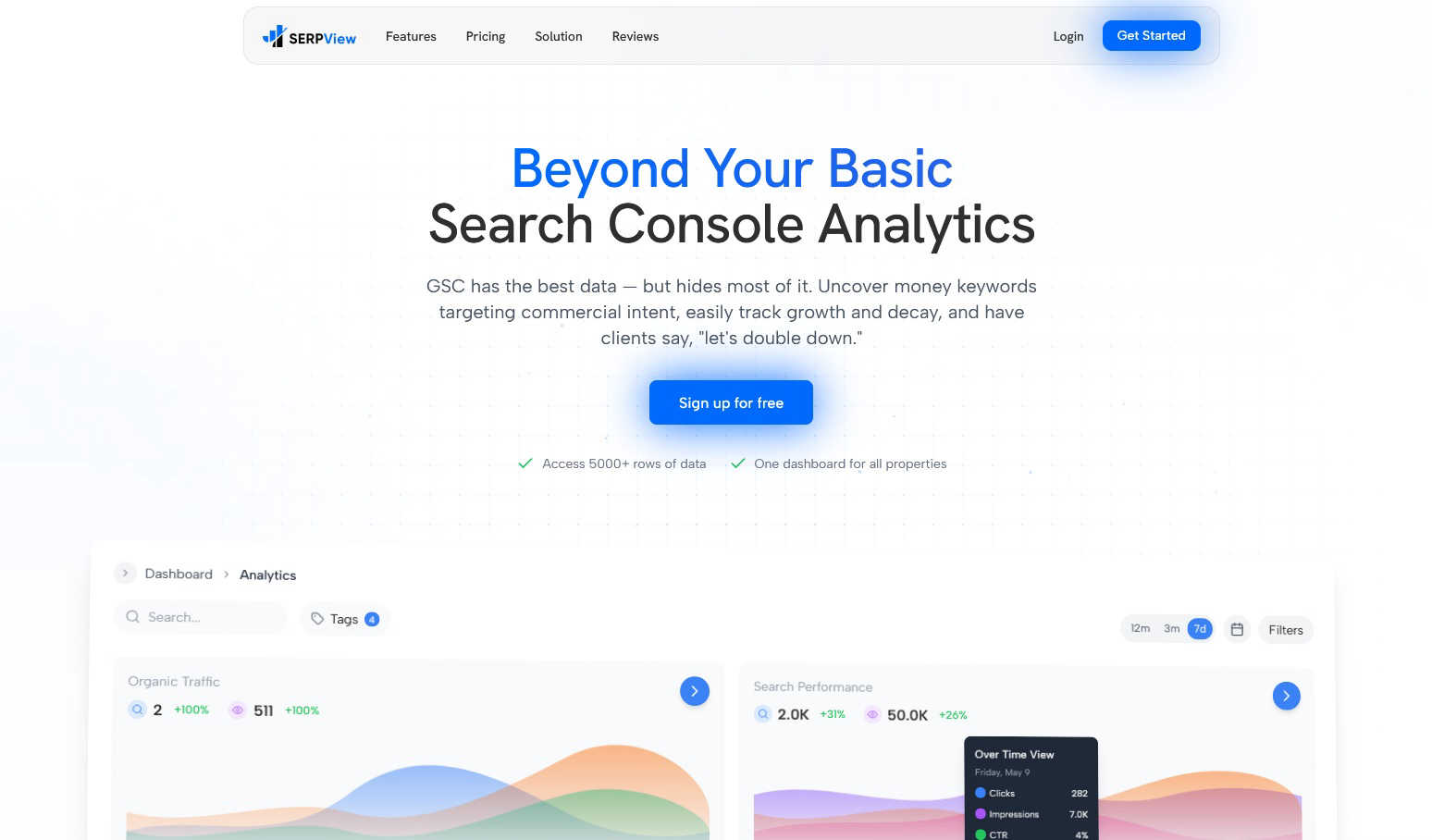
SERPView unlocks hidden Google Search Console data to reveal growth opportunities and track SEO performance.
Last updated: March 1, 2026
Visual Comparison
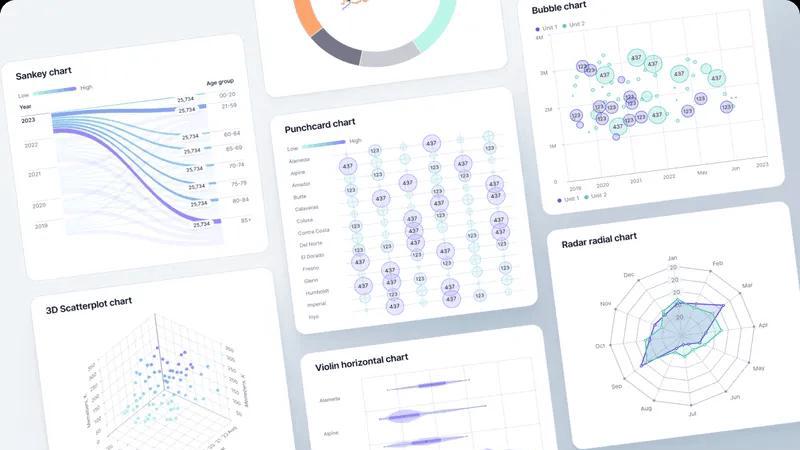
Fusedash
SERPView
Feature Comparison
Fusedash
Flexible Views
Fusedash offers the ability to create customized dashboards, charts, maps, and report-style views tailored to different audiences. This flexibility means that stakeholders can quickly access the information that matters most to them without unnecessary back-and-forth communication.
AI Chart Generator
The AI Chart Generator enables users to produce clear and compelling visuals from CSVs or APIs in mere minutes. By assisting in selecting the right chart type and refining labels, it ensures that the visuals convey the intended narrative effectively, making data storytelling seamless.
Dashboard Software
Fusedash consolidates dashboards and reporting into one powerful workspace, allowing users to combine performance metrics with narrative context. This integration aids in clarifying what changes occurred, why they matter, and what steps should follow, aligning teams and reducing version conflicts.
AI Chat
The Smart Chat feature allows users to interact with their data in plain language, making it easy to ask questions and receive suggestions for metrics and visualizations. This capability accelerates the data exploration process, transforming insights into shareable views that can be immediately utilized within dashboards.
SERPView
Unlocked Performance Tracking
Move beyond the restrictive 1,000-row limit of Google Search Console. SERPView grants you access to over 50,000 rows of granular performance data, allowing you to track clicks, impressions, CTR, and average position across your entire site without any artificial constraints. This comprehensive view is essential for identifying long-tail opportunities and understanding true performance trends that basic tools miss.
Advanced Keyword & Page Analysis
Progress from simple ranking checks to strategic intent analysis. Uncover "money keywords" that signal strong commercial intent and track their position changes over time. Simultaneously, analyze page-level performance to instantly identify your top-performing content and spotlight underperforming pages that require optimization or consolidation, turning data into direct content strategy actions.
Cross-Device & International Insights
Evolve your strategy with segmented performance intelligence. Compare your search performance across mobile and desktop devices to identify optimization opportunities for each. Furthermore, track your rankings and traffic across different countries and languages, empowering you to tailor and refine your global SEO strategy with region-specific data and insights.
Topic Cluster & Algorithm Correlation Tracking
Advance your content strategy from single-page focus to topic authority. SERPView allows you to track the performance of entire topic clusters, giving you a holistic view of your content strategy's effectiveness. Additionally, correlate your ranking changes with Google's official algorithm updates and add custom annotations for site changes, transforming volatility into understandable cause-and-effect narratives.
Use Cases
Fusedash
Performance Monitoring
Fusedash is ideal for performance monitoring across departments. Teams can create real-time dashboards that display KPIs relevant to their functions, allowing for immediate insights and timely decision-making.
Marketing Campaign Analysis
Marketing teams can leverage Fusedash to visualize campaign performance metrics and analyze engagement data. By creating tailored reports, they can easily identify successful strategies and areas needing improvement, fostering data-driven marketing decisions.
Financial Reporting
Finance teams can utilize Fusedash to generate comprehensive financial reports that combine multiple datasets. By standardizing metrics and presenting them visually, stakeholders can quickly grasp financial health and make informed budgetary decisions.
Operational Efficiency Tracking
Operations teams can use Fusedash to monitor efficiency metrics across various processes. By visualizing data trends over time, they can identify bottlenecks and optimize workflows, driving continuous improvement in operational practices.
SERPView
For SEO Agencies Managing Multiple Clients
Agencies can seamlessly connect all client GSC properties into one unified dashboard, eliminating the need to constantly switch accounts. This centralized view, combined with deep data access and shareable reports, streamlines client reporting, improves coordination across teams, and provides a superior, data-rich service that demonstrates clear value and strategic insight.
For In-House Teams Driving Content Strategy
Content and SEO managers can move beyond guessing which topics resonate. By analyzing full topic cluster performance and uncovering high-intent keywords hidden beyond the 1,000-row limit, teams can make informed decisions on which content to update, expand, or retire, ensuring every piece aligns with user demand and business goals.
For E-commerce Sites Optimizing for Commercial Intent
Online stores can use SERPView to drill deep into keyword data to identify and prioritize product and category pages targeting commercial search queries. Tracking performance across devices helps optimize for mobile shoppers, while international insights support global expansion efforts by highlighting high-potential regional markets.
For Websites Recovering from Algorithm Updates
Site owners affected by search volatility can use the annotation feature to map traffic drops or gains directly against Google's core updates or their own site changes. This correlation turns confusing ranking fluctuations into a diagnostic timeline, providing clarity and direction for recovery efforts and future update preparedness.
Overview
About Fusedash
Fusedash is an innovative AI-powered data visualization platform that revolutionizes how teams interact with their data. Designed for organizations seeking clarity and actionable insights, Fusedash transforms raw data into visually engaging dashboards, interactive charts, detailed maps, and narrative reports—all within a unified workspace. Its core value proposition lies in providing consistency and efficiency by allowing users to define key metrics and KPIs once and then reuse these definitions across various visualizations and reports. This ensures that all stakeholders, from leadership to marketing and operations, are aligned on the same trusted numbers, eliminating confusion and conflicting data stories. Fusedash empowers teams to move beyond manual reporting cycles, enabling real-time monitoring and deeper understanding of data trends through intuitive exploration and analysis. With integrated AI features like natural language data chat and smart visualization assistance, users can easily navigate their data landscape, fostering a shared source of truth that drives organizational alignment and action.
About SERPView
SERPView is the definitive evolution of search analytics, engineered for SEO professionals, digital marketers, and content creators who have progressed beyond the basic reporting of Google Search Console (GSC). It transforms the foundational, yet restricted, data from GSC into a powerful platform for strategic growth and data-driven decision-making. The core mission of SERPView is to liberate users from the limitations that hinder advanced analysis, most notably GSC's 1,000-row data cap. By unlocking access to over 50,000 rows of performance data, SERPView reveals the full, unfiltered spectrum of keyword opportunities, page-level trends, and user intent that were previously invisible. It consolidates multiple GSC properties into a single, centralized, and visual dashboard, replacing a fragmented and time-consuming workflow with a streamlined command center for organic search performance. This tool marks the critical transition from reactive reporting to proactive analysis, enabling teams to identify high-value commercial keywords, optimize comprehensive topic clusters, dissect performance across devices and countries, and correlate traffic trends with major Google algorithm updates. For any team committed to evolving their SEO strategy from guesswork to precision, SERPView is the essential upgrade.
Frequently Asked Questions
Fusedash FAQ
What types of data can I connect to Fusedash?
Fusedash allows users to connect various data sources, including CSV files, APIs, and public data. This flexibility enables the integration of diverse datasets into a single platform for comprehensive analysis and reporting.
Is Fusedash suitable for teams without technical expertise?
Absolutely! Fusedash is designed for users of all skill levels. With its intuitive interface and AI-powered features, even non-technical users can easily create visualizations and generate reports without needing extensive training.
Can I collaborate with my team on Fusedash?
Yes, Fusedash is built for collaboration. Teams can share dashboards and reports, ensuring that everyone is aligned with the same insights and metrics, which enhances communication and decision-making across the organization.
What makes Fusedash different from other data visualization tools?
Fusedash stands out due to its focus on consistency and efficiency, allowing users to define metrics once and reuse them across various visualizations. Its integration of AI features also enhances the speed and accessibility of data exploration, making it a comprehensive solution for organizations.
SERPView FAQ
How is SERPView different from Google Search Console?
SERPView is built directly on top of your Google Search Console data, so it uses the same authoritative source. The key evolution is in access and analysis: SERPView removes GSC's 1,000-row limit, provides a unified dashboard for multiple properties, and delivers advanced features like topic cluster tracking, commercial keyword identification, and algorithm update correlation that GSC does not offer natively.
What data limits does SERPView have?
SERPView significantly expands upon GSC's limitations. While Google Search Console caps data exports at 1,000 rows, SERPView unlocks access to over 50,000 rows of performance data for clicks, impressions, CTR, and position. This allows for a much more comprehensive and accurate analysis of your site's full search presence.
Can I connect multiple websites or GSC properties?
Yes, a core function of SERPView is consolidating multiple Google Search Console properties into a single, streamlined dashboard. This is ideal for agencies managing multiple client accounts or businesses with several domains or subdomains, eliminating the need to log in and out of different accounts to get a complete picture.
Does SERPView help track Google algorithm updates?
Absolutely. SERPView includes a feature to track official Google algorithm updates and allows you to add your own custom annotations for site changes (like a redesign or major content publish). You can then view your performance charts with these annotations overlaid, making it easy to correlate ranking changes with specific events.
Alternatives
Fusedash Alternatives
Fusedash is an AI-powered data visualization platform that transforms raw data into clear dashboards and actionable insights, making it essential in the analytics and business intelligence category. Users often seek alternatives to Fusedash due to various factors, including pricing concerns, specific feature sets, or the need for compatibility with existing platforms. In selecting an alternative, it's crucial to evaluate the ease of use, integration capabilities, and support for real-time data updates to ensure that the chosen solution aligns with your team's goals and enhances efficiency.
SERPView Alternatives
SERPView is a specialized analytics platform that transforms raw Google Search Console data into a strategic tool for SEO growth. It belongs to the category of advanced search analytics software, designed for professionals who need to move beyond basic reporting. Users often explore alternatives for various reasons, such as budget constraints, specific feature requirements not covered by a single tool, or the need to integrate with a different tech stack. The search for the right tool is a natural step in evolving a data-driven SEO operation. When evaluating alternatives, consider core capabilities like data depth beyond GSC limits, actionable insight generation, and the ability to track performance trends that inform strategy. The right platform should align with your team's growth stage, helping you progress from simple monitoring to advanced, opportunity-driven analysis.