
Blueberry vs Mod
Side-by-side comparison to help you choose the right tool.

Blueberry
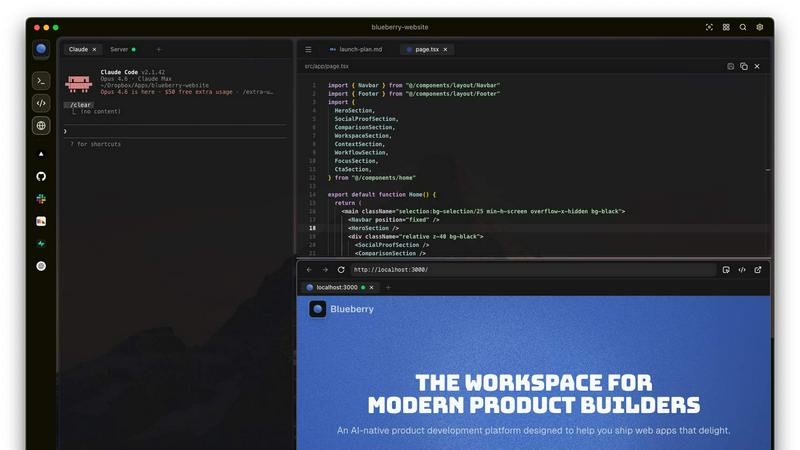
Blueberry is an AI-native workspace that unites your editor, terminal, and browser for seamless product development.
Last updated: February 28, 2026

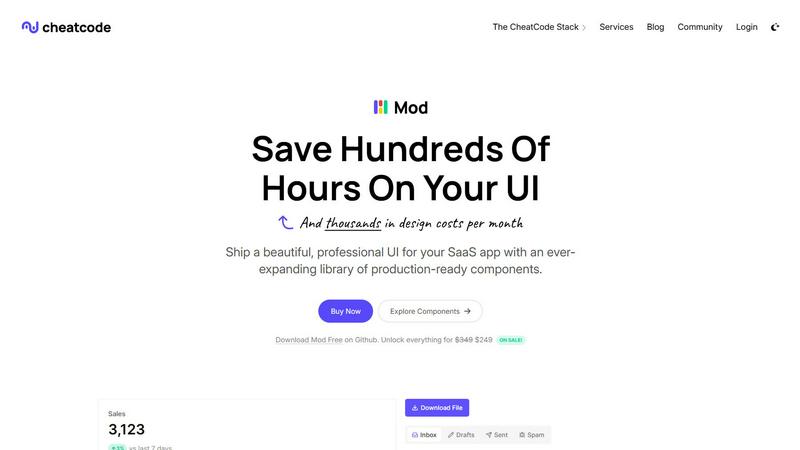
Mod evolves from a CSS framework into a complete component library for shipping SaaS UI faster.
Visual Comparison
Blueberry
Mod
Feature Comparison
Blueberry
Unified AI-Native Workspace
Blueberry consolidates your essential development tools—editor, terminal, and browser—into a single, managed window. This foundational feature eliminates the cognitive load and time wasted on manually arranging and switching between disparate applications. The workspace is designed from the ground up to be AI-aware, ensuring that every component is accessible and contextual for integrated AI assistants, creating a seamless and focused development environment that feels intuitive and powerful.
Built-in MCP Server for Full AI Context
This is the engine of Blueberry's intelligence. The integrated Model Context Protocol (MCP) server acts as a bridge, giving your connected AI model (like Claude or Gemini) a live, real-time view of your entire project. The AI can see your code changes as you type, read terminal output, inspect the state of your preview browser, and interact with pinned apps. This means you can ask complex, contextual questions without ever copying a snippet of code or a screenshot manually.
Pinned Apps with Shared Context
Blueberry allows you to dock and pin essential web applications like GitHub, Linear, Figma, or PostHog directly within your workspace. These apps load with your project and, crucially, share the same live context with your AI via the MCP server. This transforms your task management, design review, and analytics tools from isolated silos into integrated parts of your development flow, keeping all relevant information at your fingertips.
Visual Context with Screenshot & Element Select
Beyond code, Blueberry empowers your AI with visual understanding. You can directly capture screenshots of your live application preview or use an element selector to highlight specific UI components. This visual context is fed directly to your AI assistant, enabling it to provide feedback on design, debug layout issues, or suggest changes based on exactly what you're seeing, bridging the gap between code and its visual outcome.
Mod
Expansive Component Library
Mod provides an extensive collection of over 88 meticulously designed components that form the building blocks of any SaaS application. This includes everything from complex data tables, modals, and navigation bars to form elements, alerts, and pricing cards. Each component is built with accessibility and semantic HTML in mind, ensuring a solid foundation. This library allows developers to assemble sophisticated user interfaces without starting from scratch, ensuring consistency and professional polish across every page and feature of your application.
Deep Customization with Design Tokens
Beyond pre-built components, Mod offers profound customization through 168 distinct styles and a comprehensive system of design tokens. This includes spacing scales, color palettes, typography rules, and shadow elevations. You can theme your entire application by modifying these central tokens, and changes propagate automatically across all components. This system provides the flexibility to match your brand identity perfectly while maintaining the underlying consistency and quality of the Mod framework, scaling your design system as your product grows.
Framework-Agnostic & Lightweight Integration
Mod is engineered to work seamlessly within any modern tech stack. It delivers pure, utility-first CSS that can be imported into projects using Next.js, Nuxt, Vite, Svelte, Ruby on Rails, Django, and more. There is no heavy JavaScript runtime or proprietary syntax to learn; it integrates like any other CSS framework. This agnostic approach future-proofs your investment, allowing you to adopt Mod today and change your underlying application framework tomorrow without rewriting your entire UI layer.
Production-Ready Themes & Icons
The library ships with two complete, professional themes (light and dark) and includes built-in, easy-to-implement dark mode support. Furthermore, it comes bundled with a suite of over 1,500 crisp icons, covering a vast range of common SaaS needs. Having a cohesive icon set and pre-configured themes eliminates the time-consuming search for matching assets and ensures visual harmony. Every element is built with a mobile-first, responsive design philosophy, guaranteeing your application looks and works flawlessly on all devices from the start.
Use Cases
Blueberry
Rapid Prototyping and Iteration
When building a new feature or prototyping an idea, developers can code in the editor, see instant updates in the live browser preview, and use the terminal to run servers or commands—all without leaving the window. The AI can suggest code, explain errors from the terminal, and critique the UI live, dramatically speeding up the iterative build-measure-learn cycle.
AI-Powered Debugging and Problem Solving
Instead of manually correlating error messages, code, and browser state, a developer can simply ask their AI assistant, "Why is this button not working?" The AI, with full context from the terminal logs, the relevant code file, and the current browser DOM, can diagnose the issue, suggest a fix, and even implement the correction directly, turning debugging from a scavenger hunt into a guided conversation.
Streamlined Code Reviews and Onboarding
A senior developer or team lead can use Blueberry to review a pull request. With the code, the running application, and the terminal output visible simultaneously, they can comprehensively understand the changes. They can ask the AI to explain complex logic, generate tests, or assess performance implications based on the full system context, making reviews more thorough and efficient.
Context-Rich AI Collaboration
Whether you're pair programming with an AI or using it as a brainstorming partner, Blueberry provides the shared context necessary for high-level collaboration. You can ask, "How can we improve the user flow from this page?" and the AI can analyze the current component code, the live UI, and any pinned design documents to provide a coherent, actionable suggestion that considers the entire product picture.
Mod
Rapid Prototyping and MVP Development
For solo developers and startups, speed is everything. Mod is the perfect tool for rapidly transforming a concept into a tangible, investor-ready minimum viable product (MVP). By leveraging the pre-built components and layouts, you can construct a fully functional, visually compelling prototype in days instead of weeks. This allows you to validate your business idea with real users quickly, gather feedback, and iterate without being blocked by UI development hurdles.
Standardizing UI Across Development Teams
In growing teams, inconsistent UI implementation can slow down development and harm product quality. Mod acts as a single source of truth for the user interface. By adopting Mod, teams ensure that every developer is using the same components, spacing, and colors. This standardization streamlines collaboration, reduces code review time for visual aspects, and ensures that new features feel like a natural part of the existing application, maintaining a professional and unified user experience.
Modernizing Legacy Application UIs
Many established SaaS products suffer from outdated, inconsistent front-end code that is expensive to maintain. Mod provides a strategic path for gradual UI modernization. Teams can incrementally replace old, brittle CSS with Mod's components and utility classes, one section or feature at a time. This approach minimizes risk, allows for continuous deployment, and progressively delivers a fresh, modern, and responsive interface to users without a costly full rewrite.
Building Consistent Internal Tools and Admin Panels
SaaS companies often need to build robust internal dashboards, admin panels, and customer portals. These projects are critical for operations but rarely justify a large design investment. Mod is ideal for this use case, enabling small teams or even a single developer to build powerful, intuitive internal tools that maintain the same level of polish and usability as the customer-facing product, all while staying on budget and schedule.
Overview
About Blueberry
Blueberry represents a pivotal evolution in the product development workflow, moving beyond the fragmented toolset of the past into a unified, AI-native workspace. It is a macOS application designed for modern product builders—developers, engineers, and creators—who are focused on shipping delightful web applications. The core value proposition is profound yet simple: stop juggling windows and start building in a single, focused environment. Blueberry seamlessly integrates the three core pillars of development—a full-featured code editor, a powerful terminal, and a live preview browser—into one cohesive interface. This integration is supercharged by its native AI capabilities. By connecting to models like Claude, Gemini, or Codex via its built-in MCP (Model Context Protocol) server, Blueberry grants your AI assistant live, omnipresent context over your entire workspace. It can see your open files, terminal output, browser state, and even pinned apps like Figma or Linear. This eliminates the tedious cycle of copying, pasting, and switching contexts, allowing builders to maintain flow state and accelerate from idea to execution. Currently in a free beta, Blueberry is not just another editor; it's the next-stage platform where your tools and your intelligence work in concert.
About Mod
Mod represents a pivotal evolution in the journey of a SaaS developer, transitioning from wrestling with inconsistent, time-consuming UI code to shipping polished, professional applications with confidence and speed. It is a comprehensive CSS framework and component library meticulously crafted for the specific demands of building modern software-as-a-service user interfaces. Designed for solo founders, indie hackers, and development teams, Mod eliminates the traditional design bottleneck. Its core value proposition is acceleration: by providing a vast, production-ready system of visual styles and interactive components, it allows developers to bypass the repetitive groundwork of UI construction. This means you can invest your energy into your unique application logic and user experience, dramatically reducing time-to-market and the costs associated with custom design work. Framework-agnostic by design, Mod seamlessly integrates into your existing workflow, whether you're building with Next.js, SvelteKit, Rails, Django, or any other modern stack. It's not just a set of tools; it's a growth catalyst for your project, enabling you to present a mature, visually cohesive product from the very first commit.
Frequently Asked Questions
Blueberry FAQ
What is MCP and why is it important?
MCP stands for Model Context Protocol. It is a standard that allows AI models to securely connect to and interact with external tools and data sources. In Blueberry, the built-in MCP server is crucial because it safely exposes your live workspace—your files, browser, terminal, and pinned apps—to AI models like Claude. This gives the AI a deep, real-time understanding of your project, enabling it to provide relevant, contextual assistance without you manually feeding it information.
Is Blueberry just a code editor with a terminal split?
No, it is fundamentally different. While it includes a powerful editor and terminal, Blueberry is an integrated AI-native platform. The key difference is that all components are designed to work together and feed a central AI context. The editor, terminal, and browser are not just panels side-by-side; they are interconnected nodes that your AI assistant can see and interact with simultaneously, creating a unified intelligence layer over your entire development process.
Can I use my own AI models with Blueberry?
Yes. While Blueberry showcases integrations with popular models like Claude, Gemini, and Codex, its MCP server is designed to be compatible with any AI model that supports the Model Context Protocol. This open approach allows you to connect the AI tool of your choice, giving you flexibility while still benefiting from Blueberry's unified workspace and deep context-sharing capabilities.
What does "100% FREE DURING BETA" mean?
It means that while Blueberry is in its beta testing phase, all features and functionality are completely free to use. There is no cost to download, install, or use the application. This allows the development team to gather widespread feedback and refine the product. A pricing model for the stable, production version will likely be introduced after the beta period concludes, but beta users will have ample notice.
Mod FAQ
Is Mod a JavaScript library or a CSS framework?
Mod is primarily a CSS framework. It delivers its functionality through CSS classes and design tokens. While its components are demonstrated with HTML structure, there is no bundled JavaScript behavior; you implement interactivity (like opening a modal) using your chosen front-end framework (React, Vue, Svelte, etc.) or vanilla JavaScript. This keeps it lightweight and gives you full control over component logic.
How does Mod handle responsiveness and mobile design?
Mod is built from the ground up with a mobile-first, responsive design philosophy. All components, layout grids, and spacing utilities are designed to adapt gracefully from small mobile screens to large desktop displays. You use responsive modifier classes (e.g., for different breakpoints) to control how elements behave across screen sizes, ensuring your SaaS application delivers an optimal experience on every device without requiring custom media queries for common patterns.
Can I use Mod with my existing project's CSS or other frameworks?
Yes, absolutely. Mod is designed to be incrementally adoptable. You can import its CSS alongside your existing stylesheets. It uses specific, semantic class names to minimize conflicts. A recommended approach is to start using Mod for new features or during a redesign, allowing you to gradually transition your project without disrupting currently working parts of your application.
What is included in the yearly updates mentioned?
The yearly updates ensure your license provides access to new components, features, and improvements released for Mod over a 12-month period. This includes additions to the component library, expansions of the icon set, new theme variations, updates to the design token system, and compatibility enhancements for new versions of major web frameworks. It's a commitment to keeping your toolset current and growing alongside modern web development standards.