Blueberry
Blueberry is an AI-native workspace that unites your editor, terminal, and browser for seamless product development.
tool Details
Explore More
Alternatives
About Blueberry
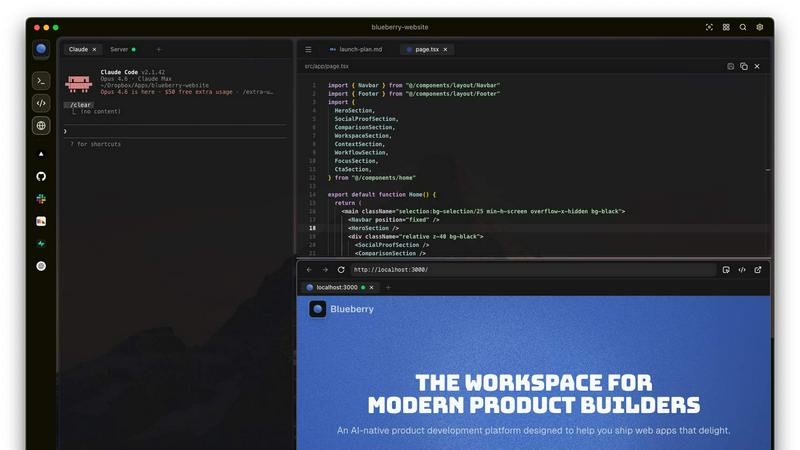
Blueberry represents a pivotal evolution in the product development workflow, moving beyond the fragmented toolset of the past into a unified, AI-native workspace. It is a macOS application designed for modern product builders—developers, engineers, and creators—who are focused on shipping delightful web applications. The core value proposition is profound yet simple: stop juggling windows and start building in a single, focused environment. Blueberry seamlessly integrates the three core pillars of development—a full-featured code editor, a powerful terminal, and a live preview browser—into one cohesive interface. This integration is supercharged by its native AI capabilities. By connecting to models like Claude, Gemini, or Codex via its built-in MCP (Model Context Protocol) server, Blueberry grants your AI assistant live, omnipresent context over your entire workspace. It can see your open files, terminal output, browser state, and even pinned apps like Figma or Linear. This eliminates the tedious cycle of copying, pasting, and switching contexts, allowing builders to maintain flow state and accelerate from idea to execution. Currently in a free beta, Blueberry is not just another editor; it's the next-stage platform where your tools and your intelligence work in concert.
Features
Unified AI-Native Workspace
Blueberry consolidates your essential development tools—editor, terminal, and browser—into a single, managed window. This foundational feature eliminates the cognitive load and time wasted on manually arranging and switching between disparate applications. The workspace is designed from the ground up to be AI-aware, ensuring that every component is accessible and contextual for integrated AI assistants, creating a seamless and focused development environment that feels intuitive and powerful.
Built-in MCP Server for Full AI Context
This is the engine of Blueberry's intelligence. The integrated Model Context Protocol (MCP) server acts as a bridge, giving your connected AI model (like Claude or Gemini) a live, real-time view of your entire project. The AI can see your code changes as you type, read terminal output, inspect the state of your preview browser, and interact with pinned apps. This means you can ask complex, contextual questions without ever copying a snippet of code or a screenshot manually.
Pinned Apps with Shared Context
Blueberry allows you to dock and pin essential web applications like GitHub, Linear, Figma, or PostHog directly within your workspace. These apps load with your project and, crucially, share the same live context with your AI via the MCP server. This transforms your task management, design review, and analytics tools from isolated silos into integrated parts of your development flow, keeping all relevant information at your fingertips.
Visual Context with Screenshot & Element Select
Beyond code, Blueberry empowers your AI with visual understanding. You can directly capture screenshots of your live application preview or use an element selector to highlight specific UI components. This visual context is fed directly to your AI assistant, enabling it to provide feedback on design, debug layout issues, or suggest changes based on exactly what you're seeing, bridging the gap between code and its visual outcome.
Use Cases
Rapid Prototyping and Iteration
When building a new feature or prototyping an idea, developers can code in the editor, see instant updates in the live browser preview, and use the terminal to run servers or commands—all without leaving the window. The AI can suggest code, explain errors from the terminal, and critique the UI live, dramatically speeding up the iterative build-measure-learn cycle.
AI-Powered Debugging and Problem Solving
Instead of manually correlating error messages, code, and browser state, a developer can simply ask their AI assistant, "Why is this button not working?" The AI, with full context from the terminal logs, the relevant code file, and the current browser DOM, can diagnose the issue, suggest a fix, and even implement the correction directly, turning debugging from a scavenger hunt into a guided conversation.
Streamlined Code Reviews and Onboarding
A senior developer or team lead can use Blueberry to review a pull request. With the code, the running application, and the terminal output visible simultaneously, they can comprehensively understand the changes. They can ask the AI to explain complex logic, generate tests, or assess performance implications based on the full system context, making reviews more thorough and efficient.
Context-Rich AI Collaboration
Whether you're pair programming with an AI or using it as a brainstorming partner, Blueberry provides the shared context necessary for high-level collaboration. You can ask, "How can we improve the user flow from this page?" and the AI can analyze the current component code, the live UI, and any pinned design documents to provide a coherent, actionable suggestion that considers the entire product picture.
Frequently Asked Questions
What is MCP and why is it important?
MCP stands for Model Context Protocol. It is a standard that allows AI models to securely connect to and interact with external tools and data sources. In Blueberry, the built-in MCP server is crucial because it safely exposes your live workspace—your files, browser, terminal, and pinned apps—to AI models like Claude. This gives the AI a deep, real-time understanding of your project, enabling it to provide relevant, contextual assistance without you manually feeding it information.
Is Blueberry just a code editor with a terminal split?
No, it is fundamentally different. While it includes a powerful editor and terminal, Blueberry is an integrated AI-native platform. The key difference is that all components are designed to work together and feed a central AI context. The editor, terminal, and browser are not just panels side-by-side; they are interconnected nodes that your AI assistant can see and interact with simultaneously, creating a unified intelligence layer over your entire development process.
Can I use my own AI models with Blueberry?
Yes. While Blueberry showcases integrations with popular models like Claude, Gemini, and Codex, its MCP server is designed to be compatible with any AI model that supports the Model Context Protocol. This open approach allows you to connect the AI tool of your choice, giving you flexibility while still benefiting from Blueberry's unified workspace and deep context-sharing capabilities.
What does "100% FREE DURING BETA" mean?
It means that while Blueberry is in its beta testing phase, all features and functionality are completely free to use. There is no cost to download, install, or use the application. This allows the development team to gather widespread feedback and refine the product. A pricing model for the stable, production version will likely be introduced after the beta period concludes, but beta users will have ample notice.
Similar to Blueberry
Egmatic
No-code 2D game editor: visual node logic, drag-and-drop scenes, live preview. Exports to Windows, macOS, Linux, Android, iOS, Web.

Product Launch Checklist
A free launch checklist for SaaS, apps, AI tools and more. Every step says why it matters and when you can skip it.

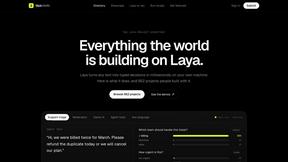
laya.tools
Free directory of 950+ projects built on Laya, the open-source model that turns text into typed decisions. Ports, SDKs, agents and demos.
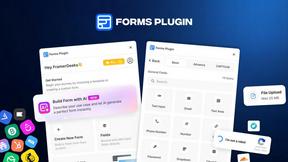
Forms Plugin
The #1 Native Form Builder Plugin for Framer - No Code, No Embeds, No External Platforms.